BEIJING - China has accelerated its strategic integration of artificial intelligence into critical infrastructure, launching a comprehensive effort to build a "new power system" by 2027. This initiative, which leverages AI to optimize renewable energy distribution and industrial manufacturing, represents a pivotal shift in Beijing's economic playbook. By tying high-tech compute capacity to sustainability goals, the government aims to solve two looming challenges simultaneously: maintaining industrial dominance while meeting stringent energy efficiency targets.
Recent reports from late 2025 indicate that this dual-track strategy is rapidly materializing. According to data from the RAND Corporation, China had amassed 246 EFLOP/s of total compute capacity by June 2024, with targets set to breach 300 EFLOP/s by the end of 2025. This digital foundation is being deployed to manage an aggressive expansion in physical energy infrastructure, including the addition of a staggering 429 GW of net new power generation capacity in 2024 alone.
The "New Power System" and Industrial Upgrading
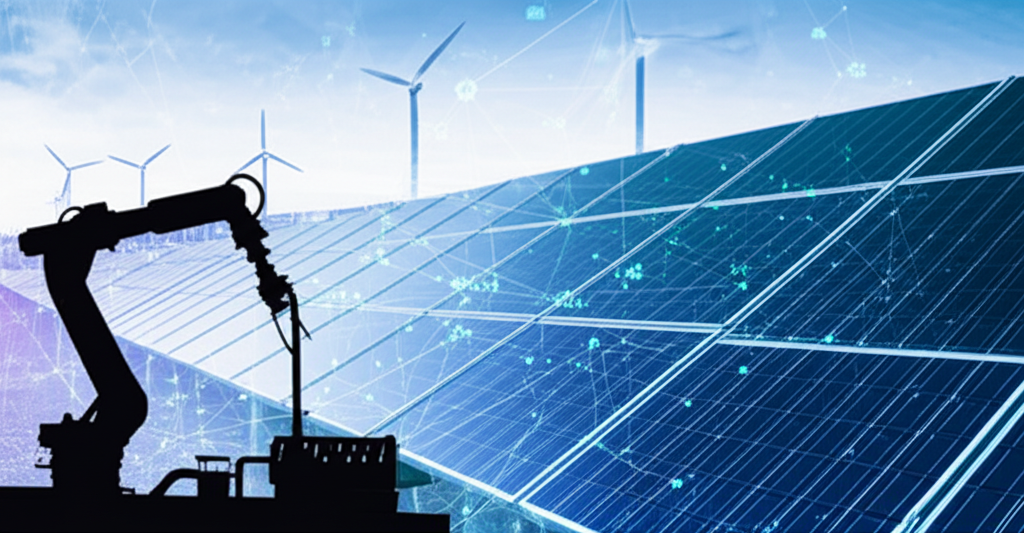
The core of this initiative is the construction of a "new power system" scheduled for completion between 2024 and 2027. As detailed by Dialogue Earth and Eco-Business in September 2025, this network relies heavily on smart technologies to balance the volatility of diverse renewable sources. AI algorithms are now tasked with enhancing the accuracy of meteorological and hydrological forecasts, a critical capability for stabilizing grids reliant on wind and solar power.
In the industrial sector, the results of AI integration have been stark. A case study published in ScienceDirect in April 2025 highlighted the potential of these technologies: implementations in Taiwanese industrial enterprises reportedly reduced average annual electricity consumption from over 1.2 million kWh to approximately 106,000 kWh-a tenfold decrease. While an extreme example, it illustrates the efficiency gains Beijing hopes to replicate across its mainland manufacturing base.
"Artificial intelligence... has significantly improved the energy efficiency of manufacturing enterprises," researchers noted in a study analyzing the impact of industrial robots, suggesting technology is helping China overcome the productivity plateau known as the Solow paradox.
Strategic Geography: The Data Center Pivot
To support the massive compute power required for these AI models without blowing past carbon emission caps, China is reshaping its digital geography. The Onero Institute reported in April 2025 that the government is steering data center development toward western provinces like Guizhou and Ningxia, where energy costs are significantly lower.
Ningxia, in particular, has emerged as a strategic hub, offering industrial land costs at 79 yuan per square meter and electricity at roughly 0.4883 Yuan/kWh-undercutting prices in Beijing and even Guizhou. This geographic arbitrage allows Chinese tech giants to train resource-intensive AI models more sustainably, leveraging the region's abundant renewable energy output.
The Paradox of Green AI
However, the transition is not without risks. A study published in ScienceDirect in September 2025 warns that the carbon footprint of China's AI sector is set to double after the 2030 carbon peaking deadline. This creates a complex paradox: AI is essential for mitigating climate change by optimizing industrial structure and resource utilization, yet its own large-scale training workloads drive increased energy demand.
Experts argue that while AI improves "carbon factor productivity," the sheer scale of the infrastructure buildup requires careful governance. The government's "East Data, West Computing" initiative aims to mitigate this by ensuring that the energy-hungry training phase of AI development occurs in regions with surplus renewable energy, rather than in the coal-heavy industrial east.
Geopolitical Implications and "New Quality Productivity"
This technological push is deeply intertwined with President Xi Jinping's concept of "new quality productivity." According to the Mercator Institute for China Studies (MERICS), Xi views AI not merely as an economic tool, but as a pillar of national security and resilience. By modernizing the manufacturing base through state-directed resource allocation, Beijing seeks to insulate its economy from external shocks and supply chain restrictions.
The Brookings Institution notes that while Beijing's rhetoric linking energy and AI is less explicit than Washington's, the strategic intent is identical. The deployment of AI to secure energy independence and optimize the power grid is seen as a commanding height in the ongoing US-China technological competition.
Outlook: The Path to 2027
As China pushes toward its 2027 target for the new power system, the integration of AI will likely deepen. Future developments to watch include the standardization of AI applications in thermal power to enhance fuel efficiency and the broader rollout of autonomous industrial robots.
Success will depend on balancing the "AI energy penalty" with the efficiency gains it delivers. If the optimized grid can absorb the massive power demands of the very AI systems managing it, China may set a new global standard for digital-industrial policy. If not, the country risks creating a new source of carbon emissions just as it strives to peak them.