BEIJING - In a significant escalation of the global semiconductor technology race, Chinese GPU manufacturer Moore Threads has solidified its position as a formidable contender to U.S. giant Nvidia. Through the deployment of its MTT S4000 AI GPU and the expansive KUAE Intelligent Computing Center, the company is demonstrating a viable path toward reducing China's dependency on foreign silicon for artificial intelligence training. As reports from 2024 and 2025 indicate, domestic technology is not merely catching up; it is beginning to power large-scale language models (LLMs) critical to national tech sovereignty.
The push for self-reliance comes amidst tightening export controls and a surging global demand for compute power. Moore Threads, founded by former Nvidia executives, has positioned the MTT S4000 not just as a piece of hardware, but as a component of a larger, integrated ecosystem designed to seamlessly replace Western infrastructure in Chinese data centers.
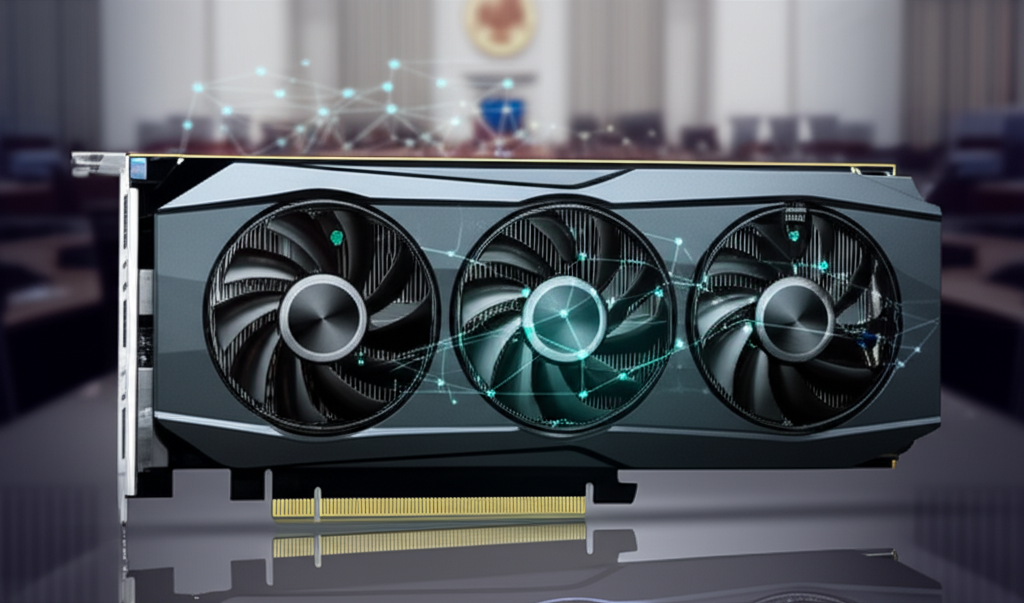
The Hardware: Inside the MTT S4000
At the heart of this strategic pivot is the MTT S4000, a GPU built on the company's proprietary third-generation MUSA architecture. According to technical specifications released by the company, the card is equipped with 48GB of GDDR6 memory and boasts a memory bandwidth of 768 GB/s. These metrics are critical for handling the massive datasets required for training modern AI models.
Performance benchmarks underscore the chip's capabilities. Reports from Tom's Hardware indicate that the S4000 delivers 25 TFLOPs of FP32 single-precision compute performance and 200 TOPS for INT8 inference operations. This represents a significant leap over its predecessor, the MTT S3000, which offered roughly 15.2 TFLOPs. Notably, the S4000 is designed with a passive cooling system, signaling its intended use in dense, high-performance data center clusters rather than consumer workstations.
"The need for high memory capacity was a necessity in the development of Large Language Models, and this card was specifically designed to meet that requirement," industry analysts noted following the launch.
Software: Breaking the CUDA Lock-in
Perhaps more significant than the raw hardware specs is Moore Threads' aggressive approach to software compatibility-the traditional moat protecting Nvidia's market dominance. The company introduced a tool dubbed "MUSIFY," which claims to offer zero-cost translation of Nvidia's proprietary CUDA framework. This allows developers to migrate existing codebases to the MUSA architecture with minimal friction.
This strategy addresses the primary hesitation for developers switching hardware: the ecosystem. By supporting established standards and providing tools like MTLink for multi-GPU interconnects, Moore Threads is lowering the barrier to entry. While specific adoption rates remain guarded, the promise of easy migration is a direct challenge to the "walled garden" that has historically kept competitors at bay.
Cluster-Scale Computing and Performance
The true test of AI hardware lies in its scalability. Moore Threads has moved beyond selling individual cards to deploying massive integrated systems. The company revealed the KUAE Intelligent Computing Center, a cluster solution capable of scaling to 1,000 GPUs.
Real-world testing has yielded promising results. In May 2024, it was reported that a cluster utilizing S4000 GPUs ranked "third fastest in AI testing," outperforming several unspecified Nvidia-based clusters. Furthermore, the company claims the infrastructure successfully trained the "Aquila2" large language model, which contains 70 billion parameters, in just 33 days. Smaller training runs on 3-billion-parameter models have also validated the system's stability and efficiency.
Implications for Tech Sovereignty
The rise of Moore Threads has profound implications for global tech politics. By developing a domestic supply chain capable of high-end AI training, China reduces the efficacy of international export controls designed to stifle its AI progress. The S4000 demonstrates that while the cutting edge of silicon lithography may still be contested, architectural innovation and software compatibility can bridge the gap.
For the business sector, this introduces competition into a monopolistic market. Reports from 2025 suggest that the S4000 boasts "double the performance" of previous domestic models, making it an increasingly attractive option for Chinese cloud providers and research institutions unable or unwilling to source restricted western chips.
Looking Ahead
As Moore Threads confirms new GPU architecture launches in late 2025, the trajectory is clear. The company is not merely building cheaper alternatives; it is building a parallel ecosystem. The success of the S4000 and the KUAE cluster serves as a proof-of-concept for a decoupled technology future.
While Nvidia remains the global gold standard, the gap is narrowing in specific, strategic verticals. The industry will be watching closely to see if the "MUSIFY" translation tool can truly deliver on its promise of zero-cost migration at scale, a factor that could determine whether Moore Threads remains a domestic niche or becomes a global disruptor.