In a defining moment for the quantum computing sector, Chicago-based hardware developer EeroQ announced on January 15, 2026, that it has successfully demonstrated a scalable control architecture capable of managing one million qubits using fewer than 50 control lines. This development, which the company claims solves the long-standing "wire problem," represents a significant departure from current industry constraints and positions the electron-on-helium (eHe) modality as a formidable competitor to established superconducting and trapped-ion systems.
The announcement marks the culmination of a rapid sequence of technical milestones for the startup. According to reports from PR Newswire and the Quantum Computing Report, the new architecture allows individual electrons-floating on a surface of superfluid helium-to be transported over long distances on a chip without loss or error. By overcoming the physical interconnect bottlenecks that typically stifle quantum processors as they scale, EeroQ has potentially unlocked a pathway to fault-tolerant quantum computing far sooner than analysts previously predicted.
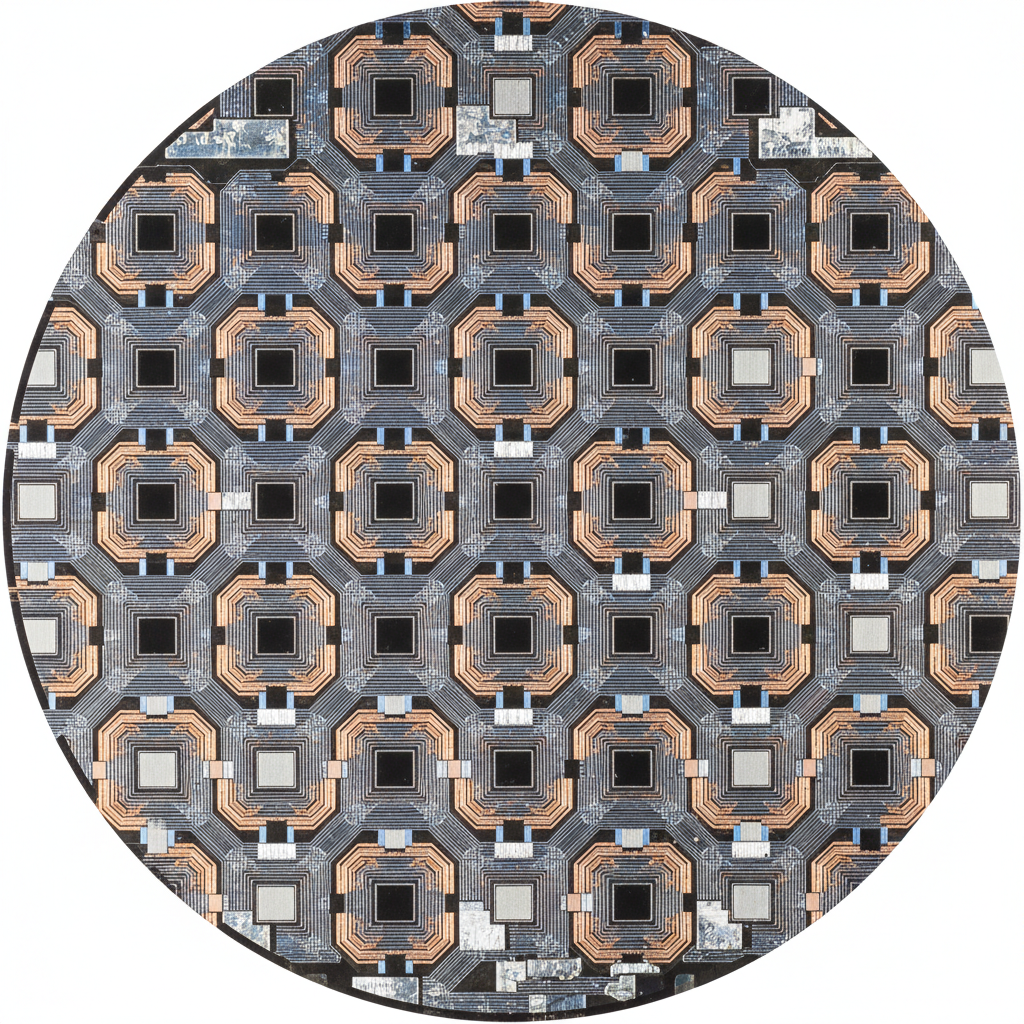
The "Wire Problem" and the Scalability Wall
To understand the magnitude of this development, it is necessary to contextualize the "wire problem" (often called the interconnect bottleneck). In dominant quantum architectures, such as superconducting transmon qubits used by major tech giants, there is typically a linear relationship between qubits and control wires. As the processor scales to thousands of qubits, thousands of wires must be fed into the dilution refrigerator. This creates unmanageable heat loads and physical congestion, effectively putting a hard cap on scalability.
EeroQ's January 15 demonstration shatters this linear constraint. By utilizing a CMOS-compatible control chip, the company showed it could address a massive array of potential qubits with a minimal input interface. According to the Quantum Computing Report, this specific demonstration validates the eHe platform as a viable alternative for implementing complex quantum circuits that require thousands of logical qubits, moving the conversation from theoretical physics to engineering reality.
Timeline of Acceleration: From Theory to Hardware
The breakthrough did not happen in a vacuum. A review of the research data reveals a tightly clustered timeline of advancements that signaled this capability was imminent:
- July 2023: EeroQ achieved the tape-out of its "Wonder Lake" chip, marking the beginning of its "scalability first" approach. This established the foundational hardware design: electrons trapped 10 nanometers above liquid helium by underlying electrodes.
- October 3, 2025: EeroQ published results in Physical Review X showing that electrons could be trapped and controlled at temperatures above 1 Kelvin. This is over 100 times hotter than the millikelvin temperatures required by competitors, significantly reducing cooling energy demands.
- December 4, 2025: Cybersecurity and semiconductor firm SEALSQ announced a strategic investment in EeroQ, specifically to accelerate a "Quantum Made in USA" strategy, validating the commercial readiness of the technology.
- January 15, 2026: The company officially announced the solution to the wire problem, demonstrating the transport of electrons without error and the architecture for controlling one million qubits.
The Science: Why Electrons on Helium?
EeroQ's approach is unique in the quantum landscape. While other modalities rely on manufactured artificial atoms or laser-suspended ions, EeroQ utilizes nature's purity. According to the company's technical documentation, the system works by filling microchannels fabricated into silicon wafers with superfluid helium. Electrons are then trapped in a vacuum above this surface.
"The qubits are single electrons that are trapped in vacuum above the surface of superfluid helium about 10 nanometers above the surface, and the qubit states are created using microwaves." - EeroQ statement via Protiviti
This separation is critical. Because the qubit (the electron) hovers above the substrate rather than residing inside it, it is immune to many of the material defects that cause noise and errors in standard solid-state chips. The October 2025 data from Physical Review X confirmed that this isolation allows for operations at higher temperatures, which further simplifies the support infrastructure required to run the machine.
Expert Perspectives and Market Reaction
The industry reaction has shifted from curiosity to serious commercial interest. Johannes Pollanen, co-founder of EeroQ, noted in October that their high-temperature results confirmed that eHe qubits could be manipulated under conditions previously thought impossible. This sentiment is echoed by investors who see the hardware's manufacturing advantages.
SecurityBrief reported that SEALSQ viewed the architecture as "one of the most promising scalable designs we have seen," citing the alignment between EeroQ's chip technology and secure semiconductor expertise. By leveraging standard CMOS fabrication techniques, EeroQ avoids the need for exotic manufacturing facilities, potentially allowing for rapid mass production once the chip design is finalized.
Implications for Politics and Industry
The success of a US-based hardware player has distinct geopolitical implications. As nations vie for quantum supremacy-a capability that could render current encryption obsolete and revolutionize materials science-sovereign control over the supply chain is paramount. The "Quantum Made in USA" strategy, bolstered by the SEALSQ investment, suggests a push to secure domestic capabilities in advanced computing.
Technologically, this breakthrough challenges the hegemony of the "gate-based" giants. If EeroQ can deliver high connectivity and long coherence times (over 1 second, according to Protiviti transcripts) with a fraction of the wiring overhead, the cost-per-qubit could drop precipitously. This would lower the barrier to entry for enterprise businesses seeking to utilize quantum algorithms for logistics, pharma, and finance.
Outlook: The Road to Fault Tolerance
While the control architecture is a monumental step, experts caution that the road to a fully functional, error-corrected quantum computer remains steep. Quantum Zeitgeist analysts note that while the 1-Kelvin benchmark is impressive, scaling to thousands of active qubits will require rigorous error-correction schemes tailored to the specific noise profile of the helium surface. Maintaining the purity of the helium film against microscopic contaminants is an ongoing engineering challenge.
However, with the "wire problem" effectively neutralized, EeroQ has cleared the most significant hardware hurdle. The focus now shifts to integration: combining the high-temperature operation, the transport capabilities, and the control architecture into a unified processor. If the company maintains its current velocity, the timeline for commercial quantum advantage may have just been shortened by years.