The defining moment for artificial intelligence in 2024 was not a product launch or a stock market rally, but a ceremony in Stockholm. In a move that fundamentally redefined the boundaries of scientific achievement, the 2024 Nobel Prizes in both Physics and Chemistry were awarded to pioneers of artificial intelligence. This unprecedented recognition serves as the ultimate validation of a trend identified by global analysts: we have entered the era of "AI for scientific discovery." According to the World Economic Forum's Top 10 Emerging Technologies of 2024 report, this shift represents a fundamental inversion of the historical norm-where science once drove technology, technology is now driving science.
The prestigious awards honored Geoffrey Hinton and John Hopfield in Physics for their foundational work on artificial neural networks, while the Chemistry prize recognized Demis Hassabis, John Jumper, and David Baker for using AI to solve the decades-old protein folding problem. These accolades underscore a reality that researchers and policymakers are scrambling to adapt to: deep learning and generative AI are no longer just commercial tools but the primary engines for unlocking the mysteries of the physical and biological world.
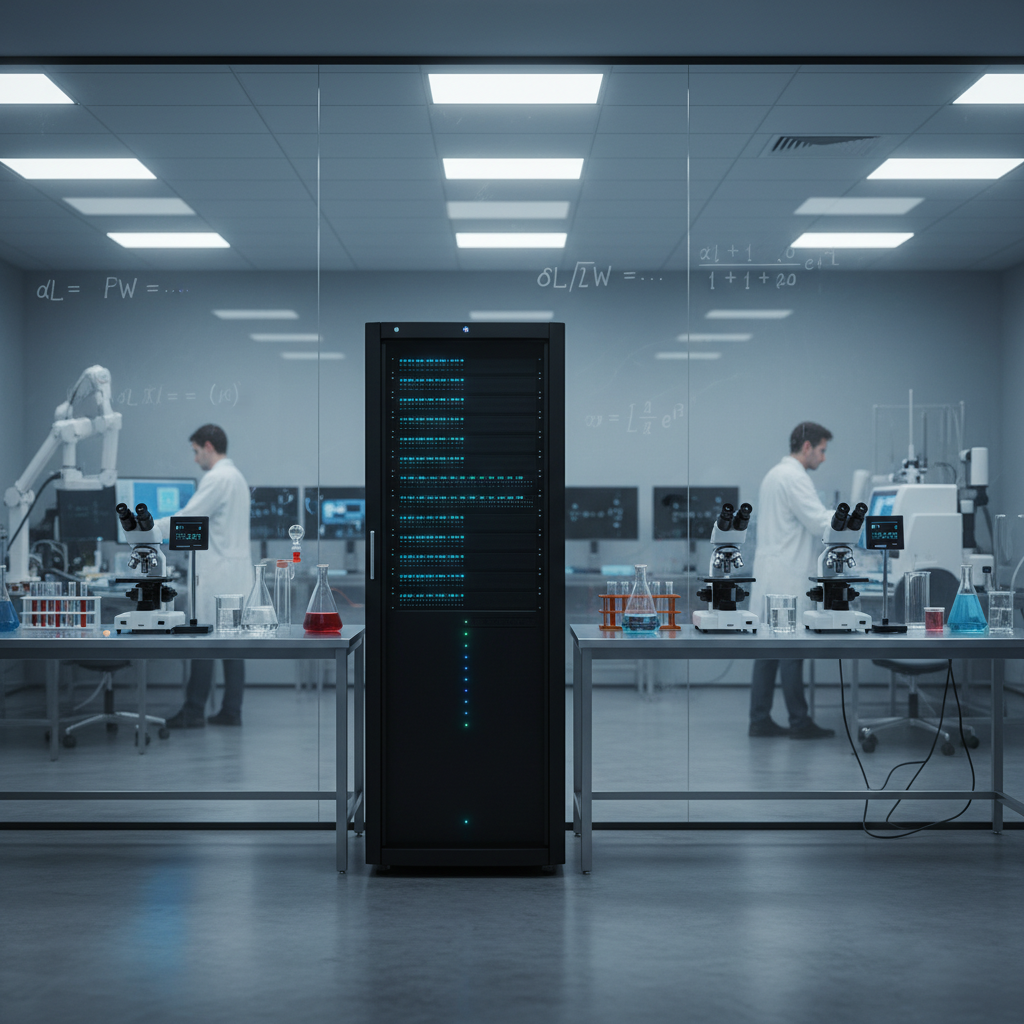
The Nobel Validation: A Timeline of Convergence
The 2024 Nobel season will likely be remembered as the point of no return for traditional scientific methodology. The Committee's decision to award the Physics prize to computer scientists Hinton and Hopfield acknowledged that the algorithms underpinning machine learning are as vital to our understanding of the universe as physical experiments. Their work on neural networks provided the bedrock for the technologies now reshaping every sector of the economy.
However, the impact was perhaps most tangible in the field of Chemistry. The recognition of Google DeepMind's Demis Hassabis and John Jumper, alongside David Baker, highlighted a specific, revolutionary breakthrough: the prediction of 3D protein structures. According to reports from the World Economic Forum, deep learning enabled the accurate prediction of these structures, effectively solving a problem that had stumped biologists for fifty years.
"By honoring Hinton, Hopfield, Hassabis, and Jumper, the Nobel Committee did more than just recognize individual achievement; they redefined the boundaries of what constitutes a 'scientific discovery.' They acknowledged that in a world of overwhelming data, the algorithm is as vital as the experiment." - FinancialContent Analysis
Accelerating the Pace of Innovation
The implications of these awards extend far beyond academic prestige. They signal a dramatic compression of research timelines. According to the World Economic Forum, AI is "dramatically shrinking research and experimentation cycles," making discoveries that once took decades possible within mere years. This acceleration is evident across multiple disciplines.
Healthcare and Life Sciences
In life sciences, the ability to predict protein structures allows for the rapid design of new drugs and treatments. Reports indicate that identifying new proteins with novel folding patterns facilitates the discovery of other unknown proteins, creating a compounding effect on medical knowledge. Generative AI is now being used to "mine" scientific literature and data, drawing connections that human researchers might miss.
Climate and Materials Science
The utility of AI extends to the planetary crisis. The World Economic Forum's Top 10 Emerging Technologies of 2024 report highlights the use of engineered organisms to combat climate change and reconfigurable intelligent surfaces-innovations accelerated by deep learning. By simulating material properties and biological interactions, AI allows scientists to test potential climate solutions virtually before deploying them physically, saving crucial time and resources.
The Double-Edged Sword: Energy and Ethics
While the scientific community celebrates these advancements, expert analysis warns of significant hurdles ahead. The massive computational power required to drive these "foundation models" comes with a steep environmental cost. According to World Economic Forum projections, global data-center electricity use could exceed 1,200 terawatt-hours by 2035-nearly triple the levels seen in 2024.
This "energy challenge" poses a complex political and logistical dilemma. As nations race to build the infrastructure necessary to support AI-driven scientific supremacy, they must balance this growth against climate commitments. The very technology being used to design climate solutions is, paradoxically, becoming a significant consumer of energy.
Global Outlook: What Happens Next?
The consensus among technologists and global forums is that we are only at the beginning of this transformation. The World Economic Forum identifies "AI for scientific discovery" as one of the technologies poised to significantly influence societies and economies within the next three to five years. We can expect to see:
- Integration of Generative AI: Moving beyond analysis to the generation of new hypotheses and experimental designs.
- Cross-Disciplinary Breakthroughts: Increased collaboration between computer scientists and natural scientists, blurring the lines between disciplines.
- Policy Adaptation: Governments will need to create frameworks that encourage AI innovation in science while managing the associated energy demands and ethical considerations.
The 2024 Nobel Prizes have signaled to the world that the age of AI in science has arrived. As algorithms continue to unlock the secrets of protein structures and material physics, the question is no longer if AI will change science, but how quickly humanity can adapt to the discoveries it yields.