Jensen Huang, the CEO of chipmaking giant Nvidia, has launched an intensified diplomatic offensive in Washington D.C., positioning himself not just as a technology leader but as a central figure in geopolitical strategy. Following a series of high-profile engagements in late 2025, including a closed-door meeting with Republicans on the Senate Banking Committee and direct talks with President Donald Trump, Huang is aggressively shaping the narrative around "sovereign AI" and American industrial policy. The move comes as the company navigates the precarious balance between complying with strict U.S. export controls and maintaining dominance in the global semiconductor market.
The strategic pivot marks a significant evolution for Nvidia. Once focused primarily on graphics and gaming, the company is now deeply entrenched in national security discussions. According to reports from WDBO and Reuters, Huang's recent visits to the Capitol have focused on two critical pillars: arguing for the necessity of distinct national AI infrastructures and advocating for energy policies that can support the massive power requirements of next-generation data centers.
The Capitol Hill Blitz: A Timeline of Influence
Huang's political engagement has accelerated significantly throughout 2024 and 2025. Data from the Center for Strategic and International Studies (CSIS) and other policy institutes track a consistent message regarding American leadership. Most recently, on December 4, 2025, Huang met privately with Republicans on the Senate Banking Committee. This meeting occurred amidst what reports describe as "intensifying lobbying" regarding the transformative effects of AI on the economy.
Earlier in the year, specifically in February 2025, Huang met with President Trump at the White House. According to Tom's Hardware, the agenda included "American AI policy, export controls on advanced AI GPUs for China, and U.S. technology and AI leadership." This direct access to the executive branch highlights the critical role Nvidia plays in the administration's "America First" reindustrialization goals.
The China Conundrum and Export Controls
The most contentious aspect of Huang's political maneuvering remains Nvidia's relationship with China. The Biden-Harris administration, followed by the Trump administration, has maintained strict export controls to prevent advanced AI chips from bolstering Beijing's military capabilities. Huang has had to walk a geopolitical tightrope.
Senators have not been universally receptive to Nvidia's position. The U.S. Senate Committee on Banking reported that Senator Elizabeth Warren criticized Huang's closed-door meetings, stating that he has spent the past year "lobbying the President to greenlight the sale of advanced AI chips to China, which could turbocharge China's military and undercut American technological leadership."
Despite these tensions, Huang argues that maintaining a presence in the Chinese market is vital for U.S. industry. In an earnings statement cited by CNBC, he emphasized that "global demand" remains strong, suggesting that the current policy landscape, while challenging, has not dampened the company's financial trajectory. Furthermore, he has publicly amended earlier predictions that China would win the AI race, later clarifying on social media that China is "nanoseconds behind America," reinforcing the need for sustained U.S. investment.
The Doctrine of "Sovereign AI"
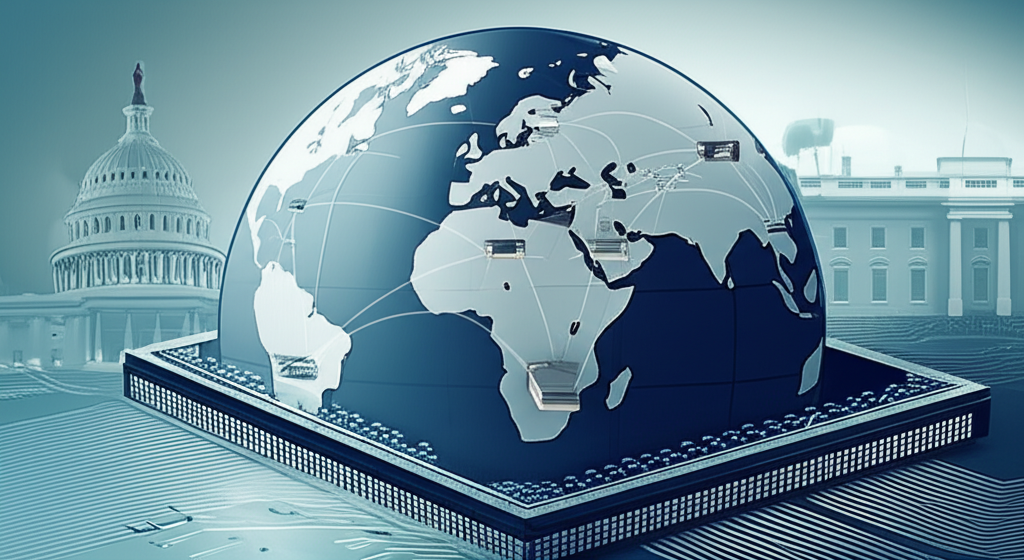
Central to Huang's policy pitch is the concept of "Sovereign AI." Speaking at the World Government Summit and later reiterated in interviews with WIRED, Huang argues that nations must own their own intelligence infrastructure.
"Every country needs to have its own artificial intelligence infrastructure in order to take advantage of the economic potential while protecting its own culture... building their own AI infrastructure, processing their own national data, having their own AI systems, and, obviously, buying Nvidia chips for that purpose." - Jensen Huang (via Reuters/WIRED)
This narrative serves a dual purpose: it aligns with nationalistic political sentiments regarding data security and culture, while simultaneously expanding Nvidia's total addressable market beyond private enterprise to nation-states themselves.
Energy, Infrastructure, and the Path Forward
The expansion of AI infrastructure faces a physical limit: energy. During a September 2024 event at the Bipartisan Policy Center, Huang discussed the symbiotic relationship between AI and energy production. Critics point to the massive carbon footprint of data centers, but Huang offered a counter-narrative.
According to Reuters, Huang stated, "If the world uses more energy to power the AI factories of the world, we are a better world when that happens," arguing that AI will eventually optimize energy grids to be more efficient than they are today. To support this domestic infrastructure build-out, Reuters also reported that Nvidia committed to building seven new supercomputers for the U.S. Energy Department, solidifying its ties to federal agencies.
Implications for the Future
As Nvidia continues to grow, its influence on public policy is becoming as significant as its impact on technology. By aligning with the "reindustrialization" goals of the Trump administration and pitching AI as a matter of national sovereignty to global leaders, Huang is insulating his company against geopolitical volatility. However, the scrutiny from lawmakers like Elizabeth Warren suggests that the path forward will not be without friction. As the U.S. government tightens its grip on high-tech exports, Nvidia's ability to navigate these corridors of power will determine not just its own stock price, but the pace of global AI adoption.