In a significant move that underscores the rapid digitization of heavy industry, Oshkosh Corporation (NYSE: OSK) unveiled a comprehensive suite of artificial intelligence and electrification technologies at the Consumer Electronics Show (CES) 2025 in Las Vegas this January. The debut marks a pivotal moment for the Wisconsin-based manufacturer, known for building the backbone of essential infrastructure-from fire trucks and postal vehicles to construction lifts and refuse collectors. By integrating advanced autonomous systems and zero-emission powertrains into "vehicles for everyday heroes," Oshkosh is signaling a broader industrial shift toward smarter, cleaner, and safer municipal operations.
The showcase, which ran through early January, highlighted specific innovations designed to transform job sites, airports, and neighborhoods. Among the flagship reveals were the McNeilus Volterra ZFL, an all-electric refuse truck, and the JLG® Galileo, a hybrid concept merging boom lift capabilities with telehandler versatility. However, it was the integration of AI-driven safety systems and autonomous charging robotics that drew significant attention from industry analysts and policymakers alike.
Key Innovations and Timeline of the Unveiling
The rollout of these technologies began on January 7, 2025, when Oshkosh Corporation opened its booth to the public. According to reports from Investing.com and Business Wire, the company focused its presentation on four key pillars: electrification, AI, autonomy, and connectivity. This strategic pivot aims to modernize the fleets used by firefighters, soldiers, postal carriers, and construction workers.
A standout introduction was the McNeilus Volterra ZFL. Described by Clean Trucking as "the battery-electric garbage truck the industry needs," this vehicle is a fully electric front-loader designed to complete a full day's route on a single charge. This addresses a critical barrier in the adoption of electric heavy machinery: range anxiety and operational uptime.
Simultaneously, Oshkosh introduced the JLG® Galileo, a concept machine that represents a convergence of construction equipment types. By combining the reach of a boom lift with the material handling capacity of a rotating telehandler, the machine promises to streamline construction logistics, reducing the number of distinct vehicles required on a job site.
Robotics and Safety Systems
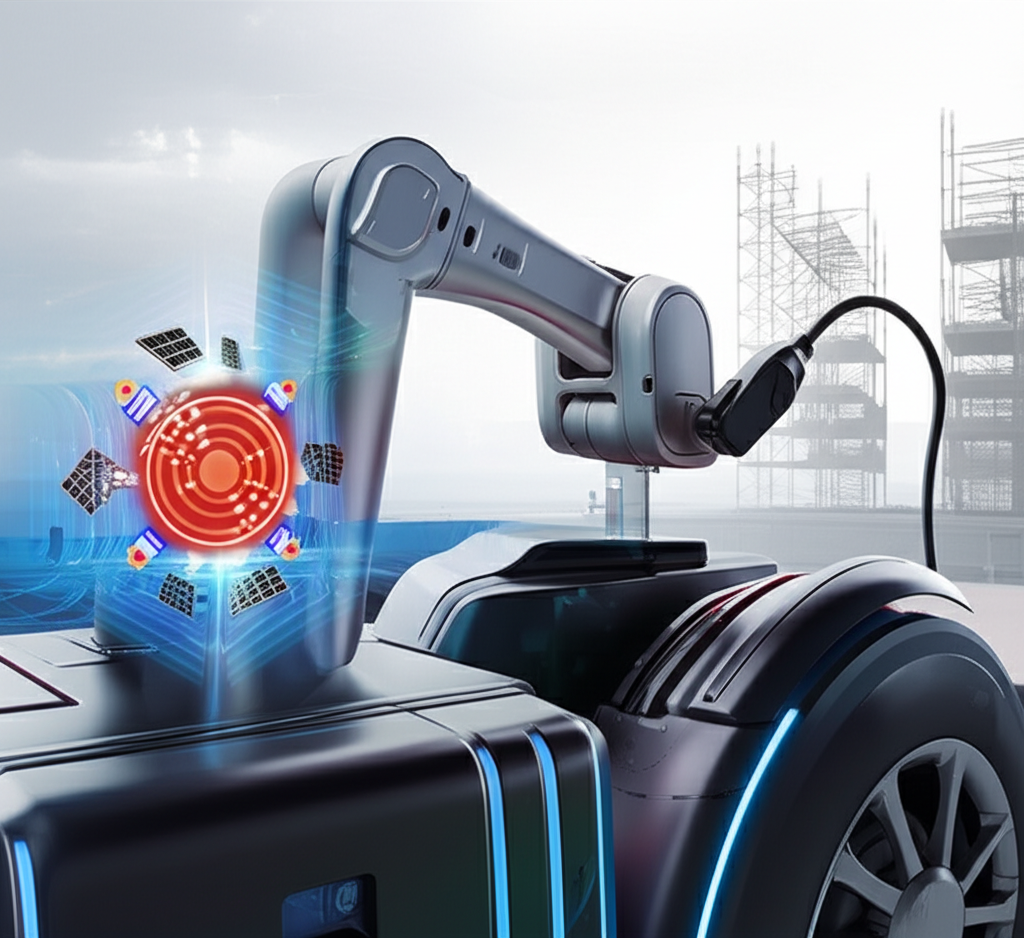
Beyond heavy vehicles, the company showcased support infrastructure necessary for an autonomous future. The Autonomous Mobile Charging Robot (AMCR) was revealed as a solution for wireless equipment charging, allowing vehicles to recharge without human intervention, potentially during downtime or overnight shifts.
Perhaps the most futuristic addition was HARR-E, an autonomous refuse robot. CleanTechnica reported on the device, describing it as a "LIDAR-equipped fully autonomous trash can." While seemingly niche, the technology garnered interest for use on university campuses and apartment complexes, illustrating how high-level autonomous tech is trickling down to micro-logistics.
Background: The Shift to Industrial Autonomy
Oshkosh's aggressive push into high-tech territory is not sudden. The company has been steadily integrating advanced electronics into its specialized vehicles, moving beyond the "retro rides" of the past to meet modern demands. The context for this shift lies in the increasing pressure on municipalities and construction firms to reduce carbon footprints while increasing worker safety.
"Oshkosh Corporation is working to bring the next wave of industrial vehicle innovations to everyday heroes from USPS vehicles to firetrucks," noted a CES Tech Talk podcast episode, emphasizing the continuity of their mission.
Safety has been a primary driver. At CES 2025, Oshkosh highlighted the Collision Avoidance Mitigation System (CAMS). According to VentureBeat, this system is designed specifically for roadside emergency scenarios. Using advanced camera technology with AI and radar, CAMS can detect the trajectory and speed of oncoming vehicles relative to a parked response vehicle, providing critical warnings to first responders who are often at high risk of being struck by passing traffic.
Implications for Business and Society
The technologies debuted at CES carry profound implications for various sectors. From a business perspective, the electrification of refuse and construction fleets promises lower long-term operating costs. Electric motors require less maintenance than diesel engines, and the integration of autonomous charging (AMCR) could optimize energy usage, charging vehicles when electricity rates are lowest.
Socially, the impact is tangible in neighborhoods. The McNeilus Volterra ZFL offers a silent alternative to the noisy diesel garbage trucks that traverse residential streets early in the morning. Furthermore, the zero-emission nature of these vehicles contributes directly to improved air quality in urban centers.
For the workforce, the introduction of AI safety nets like CAMS changes the risk profile of dangerous jobs. Firefighters and roadside construction workers gain a digital "second pair of eyes," potentially reducing fatalities caused by distracted drivers. However, the rise of autonomous units like HARR-E inevitably raises questions about the future of low-skilled labor in maintenance and logistics, a topic likely to dominate labor policy discussions as these technologies scale.
Outlook: What's Next?
Looking ahead, Oshkosh shows no signs of slowing down. Reports from Stock Titan indicate that the company is already planning its showcase for CES 2026, where it intends to debut further advancements in autonomy and connectivity. The immediate next steps involve the commercial deployment of the technologies shown this year.
As municipalities begin to update their fleets to meet stricter environmental regulations, vehicles like the Volterra ZFL are positioned to become the new standard. The successful integration of these complex systems-where a garbage truck is not just a vehicle but a data-gathering, self-charging node in a smart city network-will determine the pace at which our urban infrastructure is modernized. For now, Oshkosh has firmly planted its flag as a leader in the heavy-duty tech revolution.