In a critical response to the surging energy demands of the artificial intelligence sector, Lawrence Berkeley National Laboratory (Berkeley Lab) has intensified its efforts to stabilize the U.S. power grid. Throughout late 2025, the Department of Energy's premier research facility released updated insights and tools designed to optimize data center operations. The initiative, spearheaded by the Center of Expertise for Energy Efficiency in Data Centers, comes as new reports indicate that digital infrastructure now consumes a staggering 4.4% of total U.S. electricity-a figure that threatens to throttle AI innovation if left unchecked.
The focus of this latest push is the deployment of the DC Pro Tool and the Air Management Tool Suite. These software solutions provide operators with the granular ability to assess energy baselines and optimize airflow, potentially unlocking billions in savings and reducing the carbon footprint of the digital economy.
A Critical Timeline: The 2025 Energy Awakening
The urgency behind these developments was underscored on January 15, 2025, when Berkeley Lab released a landmark report evaluating the sharp increase in electricity demand. The findings revealed that the landscape has shifted dramatically since previous benchmarks were set in 2016.
"There's so much difference in the industry between when we looked at it in 2016 and when we look at it now," said Arman Shehabi, a staff scientist in Berkeley Lab's Energy Technologies Area and lead researcher on the report. "By showing what the energy use is and, more importantly, what's causing the growth in energy use, it helps us think about what opportunities there are for efficiencies."
Following this assessment, on December 16, 2025, the Center of Expertise highlighted the operational role of the DC Pro Tool. This tool assesses baseline energy performance and identifies major areas for improvement across infrastructure components like HVAC, UPS, and lighting. Concurrently, the Air Management Tool Suite was emphasized for its ability to evaluate airflow-a critical factor in cooling high-density AI server racks.
Inside the Toolkit: How DC Pro and Air Tools Work
The suite of tools developed by the DOE and Berkeley Lab represents a shift from passive monitoring to active diagnosis. The **DC Pro Tool** serves as the first line of defense. It allows facility managers to profile their energy usage against industry standards, identifying inefficiencies in the "power chain"-the path electricity takes from the grid to the microchip.
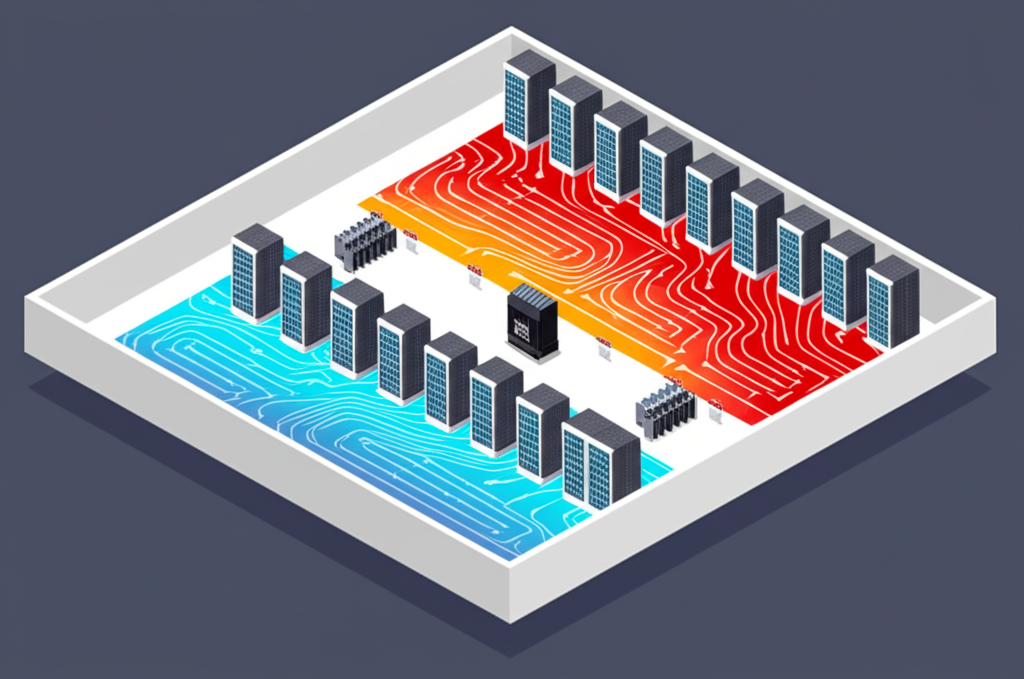
Complementing this is the **Air Management Tool Suite**. As server density increases to support Generative AI workloads, heat management becomes the primary operational constraint. This tool helps operators visualize and rectify airflow inefficiencies, ensuring that cooling energy is not wasted. According to Berkeley Lab data, these diagnostics are crucial for identifying "energy-saving actions, along with estimated energy and cost savings and payback periods."
Furthermore, the research points to structural changes in power delivery. Investigations into **Direct Current (DC) power architectures** suggest significant potential gains. Reports indicate that converting AC-based powering architectures to DC-based systems for server racks can reduce energy use by up to 20 percent, eliminating the wasteful multiple conversion steps typical in legacy data centers.
The AI Imperative: Why Efficiency Matters Now
The timing of these tools is not coincidental. The rapid adoption of AI technologies has transformed data centers from static storage facilities into dynamic, power-hungry compute engines. Mirage News reports that while efficient computing is critical, the physical infrastructure-microchips and cooling-must evolve in tandem.
For business leaders, the implication is financial. The Power Chain Tool specifically calculates electric system efficiency opportunities, offering a clear ROI analysis. In an era where energy prices are volatile, the ability to shave percentage points off utility bills directly correlates to competitive advantage. For policymakers, the tools are a mechanism to ensure that the U.S. can sustain its leadership in AI without compromising climate goals or grid stability.
Outlook: The Path to Sustainable Compute
Looking ahead, the integration of tools like DC Pro into standard operational procedures appears inevitable. The 2025 reports from Berkeley Lab serve as a warning: the "old" way of managing data center energy is insufficient for the AI era.
We expect to see tighter regulations emerging, likely requiring energy assessments similar to those provided by the DC Pro Tool for all large-scale facilities. As Arman Shehabi noted, understanding the cause of growth is the first step toward managing it. With the tools now in hand, the onus shifts to the tech giants and facility operators to implement the fixes necessary to keep the digital lights on.