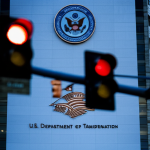
WASHINGTON, D.C. - In a calculated move that underscores the deepening entanglement of Silicon Valley and Capitol Hill, Nvidia CEO Jensen Huang brought his company's flagship GPU Technology Conference (GTC) to Washington, D.C. this week. The event, typically held in the tech hub of San Jose, California, served as a platform for Huang to align the world's most valuable semiconductor company with U.S. national security interests while navigating the treacherous geopolitical waters of China export controls.
Addressing a packed audience on October 28, 2025, Huang pledged to build seven new AI supercomputers for the U.S. Department of Energy. The announcement was the centerpiece of a broader diplomatic offensive that included high-profile meetings with President Donald Trump and Republican lawmakers, as Nvidia seeks to cement its role as the engine of American technological supremacy.

The pivot to the Potomac
The decision to host GTC in the nation's capital represents a significant shift in strategy for Nvidia. According to analysis by Techbuzz, the venue change raises questions about supply chain resilience and national security that pure performance metrics cannot answer. It is widely viewed as Nvidia's "play for the ultimate customer"-the United States government.
During his keynote, Huang walked a fine diplomatic line. Reuters reports that he credited President Trump's "America First" agenda with spurring greater investment in U.S. manufacturing and AI leadership. This rhetoric appears tailored to the current administration, which has prioritized domestic industrial strength. In a subsequent media gaggle, Huang expressed gratitude for his reception in the capital, stating, "I'm very grateful that Washington has been very open to me," according to a transcript from the Center for Strategic and International Studies (CSIS).
Navigating the China question
While the public focus remained on U.S. capabilities, the shadow of China loomed large over Huang's visit. The National reports that Huang has been actively engaging with lawmakers to influence semiconductor legislation, arguing that China's substantial energy resources grant it a distinct advantage in AI development if the U.S. falters.
"Huang walked a fine line between praising President Donald Trump... and risking further antagonism of China." - Reuters
According to The Hill, Huang's agenda included discussions on export controls. Nvidia is reportedly seeking to "get back into China" by stabilizing the regulatory environment that has restricted the sale of its most advanced chips to Chinese firms. The challenge for Huang is to frame continued sales to China as essential for fueling the R&D budget that keeps the U.S. ahead, a complex argument to make amidst heightened trade tensions.
Infrastructure and innovation
Beyond the political maneuvering, the D.C. summit showcased significant technological commitments. The seven supercomputers promised to the Energy Department will be pivotal for scientific research, nuclear security, and climate modeling. Furthermore, Longbridge reports that the keynote highlighted breakthroughs in 6G telecommunications, quantum computing integration, and robotics.
The event featured over 70 sessions and workshops, according to Nvidia's official summary, emphasizing that the company's vision extends beyond mere chip manufacturing to building the "national AI infrastructure" required for the next decade. This holistic approach aligns with bipartisan goals to secure American technological sovereignty.
Implications for the tech sector
Experts suggest that Huang's direct engagement with the Trump administration-described by Quartz as making him "Trump's biggest ally in tech"-could set a precedent for how Silicon Valley navigates the next four years. By proactively aligning with the "America First" doctrine, Nvidia may be attempting to insulate itself from potential antitrust scrutiny or further restrictive trade policies.
However, this strategy carries risks. The Hindu notes that tech executives are working to secure favorable policies for the AI industry, but the intense focus on Washington could alienate global partners. As Nvidia positions itself as a pillar of U.S. defense and energy infrastructure, its neutrality in the global market inevitably diminishes.
What happens next?
Following the meetings in Washington, the industry will be watching closely for changes in export license approvals. If Nvidia succeeds in loosening restrictions on "China-specific" chips while simultaneously securing massive U.S. government contracts, Huang's D.C. gambit will have paid off. Conversely, if the administration accepts the supercomputers but holds the line on exports, Nvidia may face a revenue squeeze in its second-largest market.
As Huang stated in his conversation at CSIS, he remains "absolutely" optimistic about the future. Whether that future includes a robust presence in China, however, is now a decision that rests as much in Washington as it does in Santa Clara.