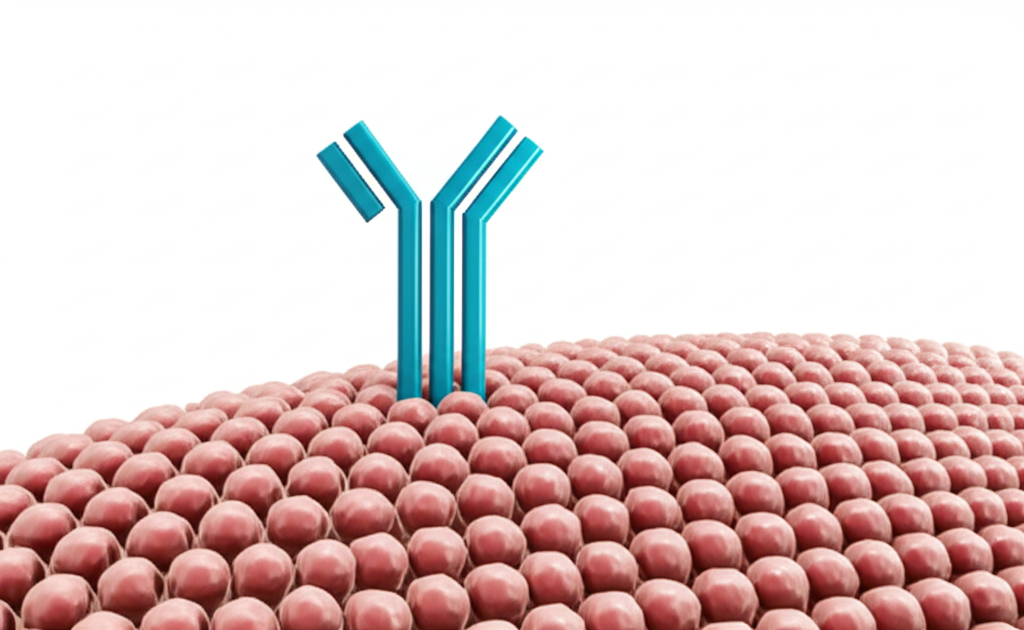
CHARLESTON, S.C. - In a significant development for precision oncology, researchers at the Medical University of South Carolina (MUSC) Hollings Cancer Center have successfully developed a humanized antibody that disrupts a critical survival mechanism in triple-negative breast cancer (TNBC). The discovery, announced in December 2025, targets SFRP2, a protein previously identified as a key factor in helping tumors evade the immune system. This finding arrives amidst a wave of clinical advancements, including new data on antibody-drug conjugates (ADCs) and bispecifics, signaling a potential turning point for one of the most aggressive and hard-to-treat forms of cancer.
Triple-negative breast cancer is defined by what it lacks: it does not have estrogen or progesterone receptors and produces little to no HER2 protein. Consequently, hormonal therapies and drugs targeting HER2 are ineffective, leaving chemotherapy as the historical standard of care. However, the new preclinical data from MUSC suggests that targeting the tumor microenvironment-specifically the proteins that shield cancer cells-could offer a viable alternative. According to the research team, the new antibody "blocks several of the ways that triple-negative breast cancer can survive, grow and evade the immune system."
The SFRP2 Breakthrough and Timeline
The path to this discovery has accelerated significantly in the latter half of the year. On December 4, 2025, MUSC Hollings Cancer Center revealed that their researchers had engineered an antibody specifically to inhibit SFRP2. In preclinical models, this intervention effectively halted tumor progression. This protein, SFRP2, is instrumental in suppressing the body's natural immune response, essentially camouflaging the tumor from attack.
This announcement was followed closely by a report on December 10, 2024, from Statnews, indicating that researchers working with BioNTech found a bispecific antibody effective in treating TNBC patients in small trials. These two events underscore a rapid diversification in therapeutic approaches. While the MUSC finding is currently in the preclinical stage, it represents a novel mechanism of action that complements existing strategies.
Context: The Rise of Antibody-Drug Conjugates (ADCs)
The excitement surrounding the SFRP2 discovery is bolstered by the clinical maturity of antibody-drug conjugates (ADCs). Unlike the newly discovered SFRP2 antibody, which targets the immune environment, ADCs function as biological "smart bombs," delivering chemotherapy directly to cancer cells via a targeted antibody.
Recent data from the Fred Hutchinson Cancer Center (May 2024) and the New England Journal of Medicine has solidified the role of sacituzumab govitecan (SG) in treating metastatic TNBC. This drug targets Trop-2, a protein found on the surface of approximately 90% of breast cancers. According to reports from the Dana-Farber Cancer Institute, SG has improved outcomes for patients ineligible for immune checkpoint inhibitors, a crucial demographic with limited options.
"Sacituzumab govitecan is an antibody-drug conjugate designed to direct a potent chemotherapy drug into cancer cells... targeting the protein Trop2, which is present at high levels on the surfaces of TNBC cells." - Dana-Farber Cancer Institute.
Expert Perspectives and Clinical Landscape
The medical community views these developments as a shift from "one-size-fits-all" chemotherapy to molecularly defined treatments. Dr. Leon Ferre of the Mayo Clinic noted in a recent blog that while immunotherapies are promising, ADCs offer help to patients who do not qualify for those drugs. "These treatments link a small amount of chemotherapy to modified antibodies - naturally occurring proteins that help fight infections," Dr. Ferre explained.
Sara Tolaney, chief of the Division of Breast Oncology at Dana-Farber, emphasized the strategic shift in treatment protocols. "It is important that we work toward shifting these very effective novel drugs to the first line of therapy to move the needle and improve outcomes for these patients," she stated. This sentiment is reflected in the sheer volume of research; as of October 2024, there were 42 active clinical trials investigating immunotherapies, ADCs, and bispecific antibodies for TNBC.
Implications for Industry and Society
Business and Technology
From a business perspective, the oncology market is pivoting heavily toward ADCs and bispecifics. AstraZeneca recently announced that their ADC, Datroway, demonstrated statistically significant improvement in overall survival in the TROPION-Breast02 trial. Similarly, BioNTech's foray into bispecifics indicates that major biotech players are diversifying their portfolios beyond mRNA technologies to capture the precision oncology market.
Social Impact
For patients, specifically those with metastatic disease, these advancements offer hope where few options existed. TNBC is disproportionately aggressive and has historically had lower five-year survival rates compared to other breast cancer subtypes. The introduction of therapies like sacituzumab govitecan and the potential of the new SFRP2-targeting antibody means that treatment is becoming less about broad toxicity and more about biological interception. The ability to treat patients who are ineligible for standard immune checkpoint inhibitors closes a significant gap in care equity.
Forward Outlook: What Happens Next?
Looking ahead to 2026, the focus will likely shift to combination therapies. The UCSF and UCSD are already conducting trials for 2025 testing various ADCs, including ARX788 and combinations involving sacituzumab govitecan. The key challenge will be determining the optimal sequencing of these drugs-whether to use ADCs before, during, or after immunotherapy.
Furthermore, the MUSC Hollings discovery regarding SFRP2 must now transition from preclinical models to human trials. If safety profiles hold, this could introduce a new class of stromal-targeting agents, fundamentally changing how oncologists approach the tumor microenvironment. As highlighted by the American Society of Clinical Oncology Educational Book, molecular subtyping and novel antibody targets are rapidly redefining the standard of care, offering a glimpse of a future where "undruggable" targets become routine.