Welcome to my studio in Lisbon, where the golden afternoon sun spills across my desk, illuminating the dust motes dancing around my monitor. As a creative tech writer who has spent the last 7 years living at the intersection of digital art and emerging technologies, I have witnessed the breathtaking evolution of our tools. Today, Artificial Intelligence is not just a novelty; it has become as essential as electricity. It is the invisible current powering our daily workflows, our strategic decision-making, and the immersive customer experiences we design. It is the ultimate digital pigment on our modern canvas.
But there is a dark side to this beautiful technological renaissance—a creeping shadow that threatens the very foundation of our digital enterprises. Imagine waking up to find that your primary tool, your most vital creative and operational partner, has been stripped away without warning. We are seeing a rising wave of sudden, unexplained enterprise account blocks by major providers like Anthropic's Claude. When your entire operational ecosystem suddenly grinds to a halt, and your only recourse is an automated, unresponsive Google Form, you are forced to confront a terrifying reality. Your magnificent digital architecture is built on a single, fragile thread.
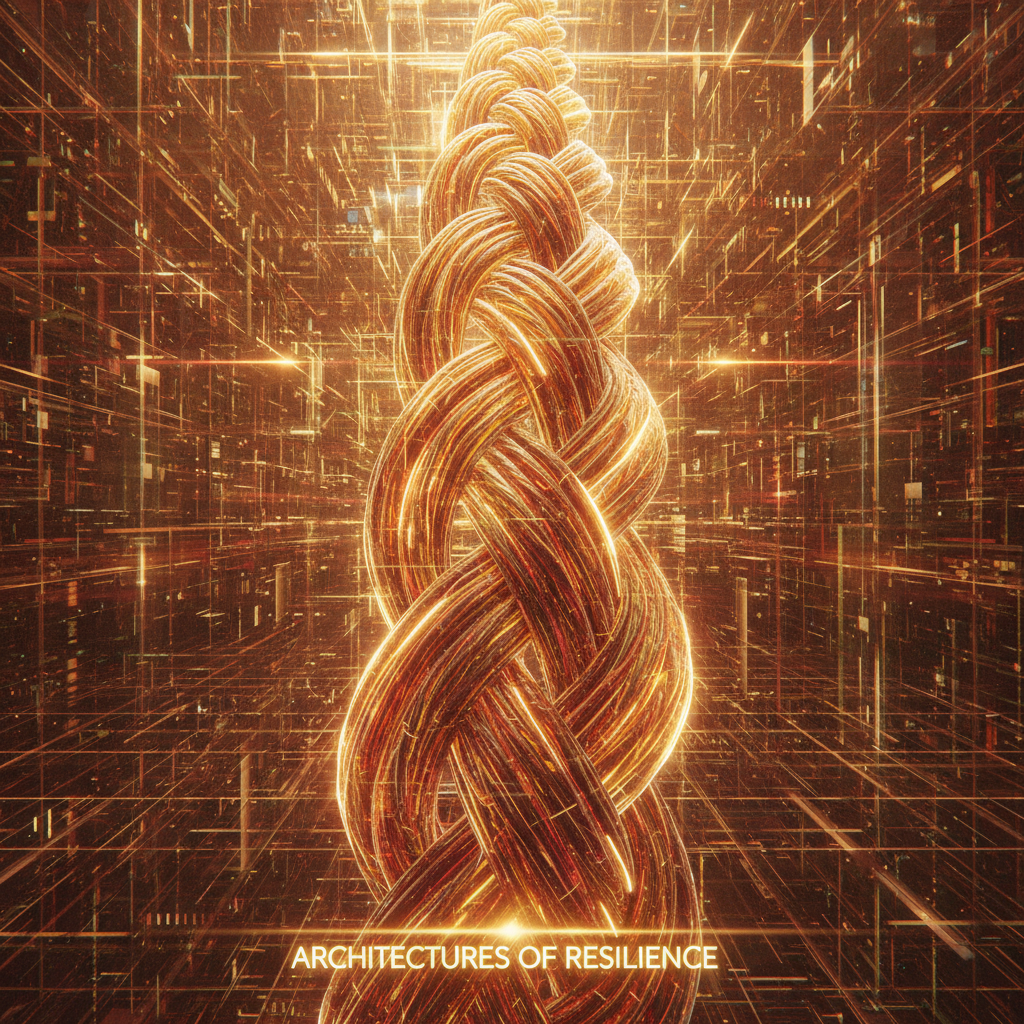
This brings us to a critical design thinking question: should any business, creator, or enterprise trust a single AI lifeline? In the world of design, we know that form must follow function, and resilience is the ultimate function. Relying on one AI provider creates a precarious supply chain bottleneck. It is an existential vulnerability masquerading as technological convenience.
The Fragile Tapestry of Single-Platform Dependency
To truly understand this vulnerability, we must look backward before we look forward. The tech landscape is littered with the ghosts of businesses that tied their survival to a single platform's whim. We have seen Instagram's negligent, automated account closures erase years of community building for independent digital artists. We have watched Google's site-wide algorithm updates overnight decimate SEO-dependent businesses, turning bustling digital storefronts into ghost towns. The current AI landscape is repeating this exact same historical pattern, but with even higher stakes. When a core AI model is deprecated or an account is arbitrarily flagged and suspended, the damage is instantaneous and often catastrophic.
A Gallery Without Doors
Let me share a deeply personal lesson. Exactly 7 years ago, during my very first major foray into generative design, I was commissioned to create an interactive digital art installation for a gallery in the historic heart of Chiado. I built the entire generative visual system relying exclusively on a single, highly specialized early machine-learning API. It was beautiful, seamless, and entirely dependent on a server sitting halfway across the world. Just 48 hours before the grand opening, the provider pushed an unannounced security update that permanently blocked my API key due to "unusual regional activity." I had no backup, no alternative model, and no way to reach a human for help. That weekend was a blur of panic and frantic recoding. That harrowing experience permanently altered my design philosophy: a masterpiece with a single point of failure is simply a tragedy waiting to happen.
The Architecture of Redundancy: A Design Thinking Approach
In design thinking, we emphasize empathy—understanding the human cost of systemic failure. When an enterprise loses its AI brain, it is the human employees and customers who suffer the whiplash. This is why I passionately argue for a multi-model strategy. Yes, adopting multiple models—perhaps combining local open-source models with active integrations across at least two independent cloud services like OpenAI and Anthropic—will incur operational overlap. It will require duplicated costs and complex API management.
"Redundancy in digital architecture is not a waste of resources; it is the essential insurance policy that protects the integrity of your creative and operational vision against the unpredictable tides of big tech."
To illustrate the stark reality of these platform vulnerabilities, let us examine the data surrounding single-vendor dependencies and their impact on digital businesses over the past year.
| Incident Category | Average Time to Resolution | Estimated Productivity Loss | Enterprise Impact Example |
|---|
| Unexplained AI API Suspension | 5 to 14 Days | 85% pipeline halt | Customer service chatbots offline; automated content generation frozen entirely. |
| Social Media Account Lockout | 3 to 6 Weeks | 60% revenue drop | Complete loss of primary audience communication and brand visibility. |
| Search Algorithm Ban | 3 to 6 Months | 90% traffic reduction | E-commerce platforms losing all organic acquisition channels instantly. |
Painting a Resilient Multi-Model Masterpiece
How do we design a system that can withstand the sudden loss of an AI giant? We must treat our technology stack like a painter treats their palette—diversified, blended, and adaptable. If one color runs out, the painting must still be completed. Implementing a multi-model strategy requires a deliberate sequence of architectural choices. Here is how you can systematically construct this safety net:
- Map Your Dependencies: Begin by auditing every single workflow, customer touchpoint, and creative pipeline that currently relies on an AI API. Identify your points of highest vulnerability.
- Establish an Abstraction Layer: Never hardcode a specific AI provider's API directly into your core application. Use middleware or an abstraction layer so that swapping from Claude to GPT-4, or to a Gemini model, is merely a matter of changing a configuration file, not rewriting your entire codebase.
- Deploy Local Fallback Models: For critical, privacy-sensitive, or highly repetitive tasks, deploy localized, open-weights models on your own secure servers. They may not have the sweeping creative nuance of the largest cloud models, but they will keep your lights on during an outage.
- Maintain Parallel Subscriptions: Keep active, funded, and tested accounts with at least two distinct Tier 1 AI providers. Treat the monthly subscription cost of the secondary provider as the cheapest business insurance you will ever buy.
Actionable Strokes: Diversifying Your Digital Palette
Transitioning to a multi-model ecosystem is a journey of continuous design thinking. It requires you to be proactive rather than reactive. As you begin weaving these safety nets into your business operations, keep these vital, actionable strategies in mind to ensure your creative and operational independence:
- Export Your Prompts Daily: System instructions, fine-tuned prompts, and context windows are the intellectual property of your business. Back them up outside of the AI provider's interface so they can be easily ported to a new model.
- Run Routine Fire Drills: Once a quarter, deliberately shut off access to your primary AI tool for a few hours. Test whether your team can seamlessly switch to the backup models without catastrophic workflow disruption.
- Standardize Your Data Formats: Ensure that the data you feed into these models is formatted in universal, open standards, allowing for rapid transition between different AI ecosystems without the need for extensive reformatting.
The True Price of Creative Freedom
Yes, embracing this multi-model philosophy means acknowledging that our digital tools are inherently volatile. It means doing the hard work of building redundant systems, paying for overlapping services, and constantly educating our teams on multiple platforms. But this is the true cost of creative and operational freedom in the AI era. We cannot allow our businesses to be held hostage by a single, faceless algorithm or an automated moderation system that responds only through a void of Google Forms.
As I sit here in Lisbon, watching the city's ancient architecture stand resilient against the test of time, I am reminded that the best designs are those built to endure. By diversifying your AI dependencies, you are not just preventing an IT disaster; you are preserving the soul, the flow, and the future of your enterprise. Do not wait for the screen to go dark. Start designing your resilient, multi-model masterpiece today, and take back the control of your digital destiny.