A converging series of high-level warnings from global financial authorities has crystallized into a singular, urgent narrative: the financial sector's rapid adoption of Artificial Intelligence is outpacing the regulatory frameworks designed to control it. Throughout late 2024 and 2025, reports from the Financial Stability Board (FSB), the International Monetary Fund (IMF), and the U.S. Department of the Treasury have outlined a precarious "governance gap" where innovation is generating systemic vulnerabilities faster than oversight bodies can address them.
According to reports by FinTech Global, this disconnect poses significant threats to market stability. While the promise of AI in fintech is lucrative-with market projections soaring-the hidden costs are manifesting in the form of adversarial manipulations, validation failures in high-assurance applications, and sophisticated fraud that defies traditional monitoring.

The Timeline of Risk: A Year of Warnings
The trajectory of regulatory concern has been steep. In October 2024, the IMF's Global Financial Stability Report explicitly linked high macroeconomic uncertainty with AI, warning that these technologies could "exacerbate downside tail risks to markets, credit supply, and GDP growth." This foundational warning set the stage for a year of intense scrutiny.
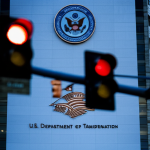
By December 19, 2024, the U.S. Department of the Treasury released a pivotal report on the risks of AI in financial services. The findings were stark: Generative AI models, while powerful, were deemed "currently very costly to implement and very difficult to validate for high-assurance applications." This validated concerns that the "black box" nature of these algorithms makes them ill-suited for the rigorous transparency required in global finance.
Most recently, on October 10, 2025, the Financial Stability Board issued its fourth AI report. This document marks a shift from observation to active defense, examining how financial authorities can effectively monitor AI adoption to assess vulnerabilities before they metastasize into crises.
The Mechanics of Vulnerability: Fraud and Manipulation
While regulators worry about macro-stability, operational teams are battling a surge in sophisticated cyber threats. Experts indicate that the very tools used to detect fraud are being weaponized by bad actors.
"Advanced AI programs are now capable of mimicking the behavior of a real person, allowing the fraudsters to evade financial institutions monitoring for unusual activity," noted panelists at the Money 20/20 conference, as reported by Cybersecurity Dive.
This capability for mimicry creates an arms race. According to Konceptual AI, AI-powered fraud detection systems are 89% faster than traditional methods, preventing an estimated $12 billion in losses in 2024 alone. However, the flip side is daunting. Clifford Chance highlights the risk of "adversarial manipulations," where AI systems are subject to deliberate attempts to sabotage their decision-making logic. Furthermore, the Kroll Data Breach Outlook confirmed that the financial services sector remains one of the primary targets for security incidents, driven by the sensitive nature of the data involved.
Expert Perspectives on the "Governance Gap"
The consensus among experts is that the technology is currently running ahead of the guardrails. FinTech Global explicitly refers to this as "The Governance Gap," pointing out that AI risks remain largely unchecked in many areas of financial services. This view is supported by the IMF, which has raised concerns regarding "embedded bias, privacy concerns, outcome opaqueness, and performance robustness."
Even major industry players acknowledge the limitations. IBM, referencing the Treasury's findings, notes the difficulty in validating these models for high-stakes decisions. When a credit scoring model or a fraud detection algorithm cannot be fully audited because its decision-making process is opaque, it introduces a layer of risk that traditional risk management frameworks struggle to quantify.
Implications for Business and Policy
Economic Impact: Despite the risks, the economic momentum is undeniable. A FinTech Futures report indicates the global market for AI in fintech is set to grow by $56.9 billion by 2030, with major entities like AWS, Google, and IBM at the forefront. This creates a high-pressure environment for businesses: adopt AI to remain competitive, or pause for safety and risk obsolescence.
Regulatory Response: For policymakers, the challenge is shifting from theoretical guidelines to concrete enforcement. The FSB's October 2025 report suggests a move toward active monitoring, but the implementation differs across jurisdictions. In the EU and US, the focus is increasingly on "performance robustness" and preventing the transmission of systemic risks through interconnected digital platforms.
Future Outlook: The Road to 2030
As we look toward the latter half of the decade, the integration of AI in finance will likely become more bifurcated. We expect to see a "sanctioned" tier of highly regulated, explainable AI models used for core banking functions, distinct from more experimental generative models used in customer service and marketing.
The StxNext analysis suggests that data breaches will remain a critical vulnerability, requiring a new generation of cybersecurity protocols. Ultimately, the stability of the global financial system may depend on how quickly the "governance gap" can be closed-transforming AI from a source of uncertainty into a pillar of verifiable, secure infrastructure.