NEW YORK - The convergence of artificial intelligence and biological science has reached a pivotal milestone. In a move designed to transform the landscape of patient care and medical research, the Icahn School of Medicine at Mount Sinai has officially opened the Hamilton and Amabel James Center for Artificial Intelligence and Human Health. The launch comes amidst a global surge in neuro-computing breakthroughs, including recent reports of artificial neurons capable of replicating brain processes, signaling a new era where silicon and biology increasingly overlap.
The new facility, situated in the heart of the Mount Sinai Hospital campus, represents a significant institutional bet on the future of algorithmic medicine. According to reports from November 2024, the center houses large supercomputers with cloud computing database capabilities, providing the infrastructure necessary to process the staggering volume of data generated by modern healthcare. This development occurs as researchers across the field-including a team at USC documented in late 2025-have successfully built artificial neurons using ion-based diffusive memristors, a technology that emulates how actual brain cells transmit signals.
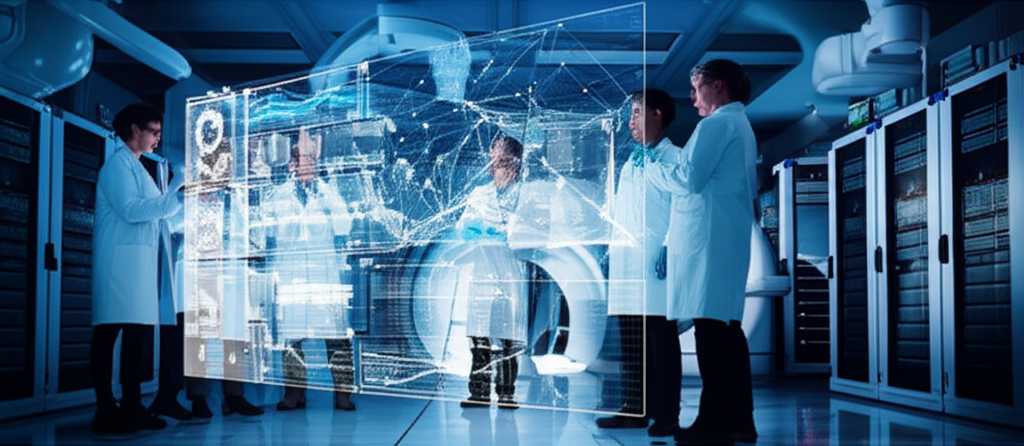
Infrastructure for the "AI Revolution"
The opening of the Hamilton and Amabel James Center is not merely an expansion of real estate; it is a consolidation of intellectual resources. The center will host eight AI-related departments, including the Hasso Plattner Institute of Digital Health, the Institute for Genomic Health, and the BioMedical Engineering and Imaging Institute. This centralization aims to break down silos between computational scientists and clinical practitioners.
"Mount Sinai has been at the forefront of AI research and development in health care, and now we stand as one of the first medical schools to establish a dedicated AI research center." - Dr. Eric Nestler, Dean for Academic and Scientific Affairs at Icahn School of Medicine.
Dr. Nestler emphasized the necessity of this shift in a recent Nature commentary, noting that "the human brain does not have the capacity to absorb the sheer volume and different types of data that we generate from our patients right now." The center's mission is to harness AI to recognize patterns that elude human physicians, a capability that is becoming critical as medical data sets grow exponentially.
From Artificial Neurons to Predictive Care
While the infrastructure is being laid at Mount Sinai, the broader scientific community is making strides that validate this investment. Recent developments in 2025 have seen the creation of artificial neurons that use chemical signals to process information, offering massive energy and size advantages for neural prosthetics. While these specific "memristor" breakthroughs originated from partner research institutions like USC, the Icahn School of Medicine is actively deploying similar high-level AI to model disease and cognition.
For instance, researchers at Icahn have recently harnessed machine learning to identify key predictors of mortality in dementia patients, a critical step in managing neurodegenerative diseases. Furthermore, in December 2025, the school introduced a new AI tool capable of identifying genetic mutations and predicting associated diseases, directly linking code to cure.
Real-Time Clinical Integration
The focus at Mount Sinai is heavily tilted toward translation-moving AI from the lab to the bedside. The Clinical Science Data team has developed a real-time streaming platform to integrate AI and machine learning directly into hospital settings. A concrete success story is the NutriScan AI application, which earned the prestigious Hearst Health Prize in 2024. This tool exemplifies how intelligent decision-support systems are already improving patient outcomes.
Redefining Medical Education
The implications of this technological shift extend to the workforce of tomorrow. In May 2025, the Icahn School of Medicine became the first medical school in the nation to fully incorporate AI into its doctor training program by rolling out OpenAI's ChatGPT Edu. This private, secure platform is now accessible to all medical and graduate students.
This move acknowledges a new reality: future physicians must be competent in partnering with AI. The school's PhD program in Biomedical Sciences now features a multidisciplinary training area in "Artificial Intelligence and Emerging Technologies," preparing students to work with next-generation medical devices, robotics, and virtual reality simulations.
Outlook: The Symbiosis of Man and Machine
As institutions like Mount Sinai consolidate their AI capabilities, the medical field is poised for rapid disruption. The alignment of physical infrastructure (the James Center), educational reform (ChatGPT Edu), and clinical application (NutriScan, genomic prediction) creates a robust ecosystem for innovation.
However, challenges remain. As noted in a recent Mount Sinai study, AI-like humans-can "jump to conclusions," necessitating rigorous oversight and explainable models. The next decade will likely be defined by how effectively these institutions can balance the raw power of artificial neurons and predictive algorithms with the nuance of human clinical judgment.