SAN FRANCISCO - The debate over the safety of autonomous vehicles has reached a critical inflection point in late 2025. Waymo, the Alphabet-owned autonomous driving unit, has released a comprehensive suite of data arguing that its robotaxis are exponentially safer than human drivers. According to new reports, the company's vehicles are involved in significantly fewer injury-causing crashes than their human counterparts. However, as the fleet scales to cover over 50 million rider-only miles, the absolute number of incidents has risen, drawing intensified scrutiny from federal regulators and public skeptics alike.
The central tension lies between statistical rates and tangible reality. While Waymo touts an 85% to 92% reduction in injury claims compared to human baselines, the National Highway Traffic Safety Administration (NHTSA) continues to probe "unexpected behaviors." This dichotomy - superior safety rates versus a growing log of physical collisions - defines the current regulatory and public relations battlefield for the robotaxi industry.
By the Numbers: The Case for Automation
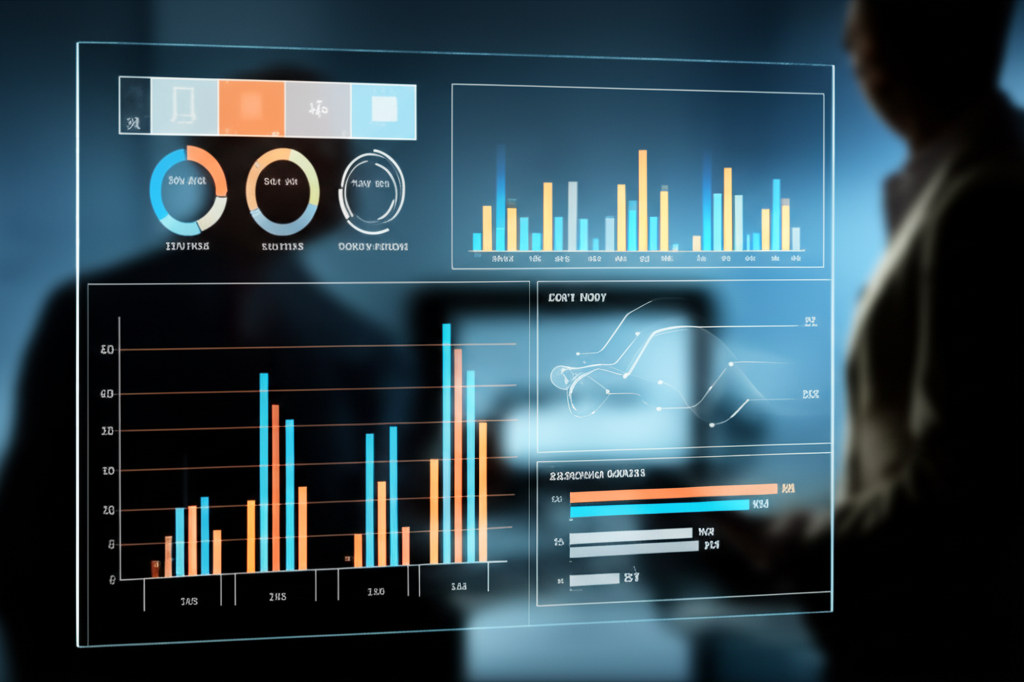
Waymo's primary defense relies on comparative data analysis. In collaboration with reinsurance giant Swiss Re, the company analyzed liability claims over millions of autonomous miles. The results, as reported by Forbes in December 2024, indicated that Waymo vehicles generated 88% fewer property damage claims and 92% fewer injury claims than average human drivers in the same regions.
Further data emerging in late 2025 reinforces this trend. According to reports from eWEEK and Sherwood News, Waymo's fleet has logged over 56 million rider-only miles. Within this dataset, the vehicles were involved in 91% fewer crashes causing serious injury and 80% fewer crashes causing any injury compared to human benchmarks. These confidence intervals were computed using rigorous methodologies, including the Poisson Exact method, to ensure statistical significance.
"Waymo's 56M+ rider-only miles show 85% fewer serious injuries than humans." - eWEEK, September 2025
The Friction of Scaling: Rising Incident Counts
Despite the favorable rates, the raw volume of incidents has increased as Waymo expands its operational domain. Data from legal and safety tracking firms indicates that there were 696 reported Waymo accidents between 2021 and 2024. However, in 2025 alone, an additional 464 incidents were recorded by late August. This spike correlates directly with the massive increase in miles driven, yet it presents a PR challenge.
Critics point to specific severe incidents. Reports confirm one fatality involving a Waymo vehicle occurred in early 2025, alongside a mix of serious and minor injuries. While proponents argue that human drivers cause over 40,000 deaths annually in the U.S. alone, a single robotaxi fatality generates disproportionate headlines, complicating the narrative of "superhuman" safety.
The Liability Question
A crucial aspect of these statistics is the determination of fault. Analysis by Understanding AI highlights that in the vast majority of collisions, human drivers are to blame. The data shows that Waymo vehicles are frequently rear-ended or sideswiped by erratic human behavior. Of the 45 most serious crashes analyzed in late 2025, very few were deemed the fault of the autonomous system. Notably, three "dooring" incidents-where a passenger opens a door into traffic-accounted for a significant portion of the serious injuries, a safety vector that involves passenger behavior rather than driving software failure.
Regulatory and Industry Implications
The divergence between safety rates and incident volume has caught the attention of federal regulators. The NHTSA launched a probe following reports of robotaxis exhibiting "unexpected behavior" and violating traffic laws. This investigation underscores the government's difficulty in regulating a technology that may be statistically safer than humans but still prone to non-human errors that disrupt traffic flow.
For the insurance industry, the data is transformative. The collaboration with Swiss Re suggests that insurers are beginning to view autonomous driving not as a liability risk, but as a safety product. If the 92% reduction in injury claims holds true at a national scale, it could fundamentally restructure automotive insurance premiums and liability law.
Outlook: The Battle for Trust
Looking ahead to 2026, the success of Waymo and the broader robotaxi sector will depend on winning the public trust argument. The company is betting that transparency-publishing granular comparisons using academic standards like the Retrospective Automated Vehicle Evaluation (RAVE)-will eventually overcome skepticism.
However, with over 1,200 total reported accidents now on the books, every new collision serves as ammunition for critics. The technology has proven it can avoid the drunk, distracted, and drowsy driving errors that plague humans. The challenge now is proving it can navigate the chaos of human cities without creating new, unforeseen hazards of its own.