DELAWARE - In the quiet understories of North American forests, a subtle signal is emerging that may offer more insight into the upcoming hurricane season than some meteorological models. Scientists monitoring the migration patterns and returning songs of the Veery Thrush have identified a correlation between the bird's nesting behaviors and the intensity of Atlantic storms. This biological early warning system is not just a curiosity for ornithologists; it is a critical data point in understanding how climate change is reshaping movement across the globe.
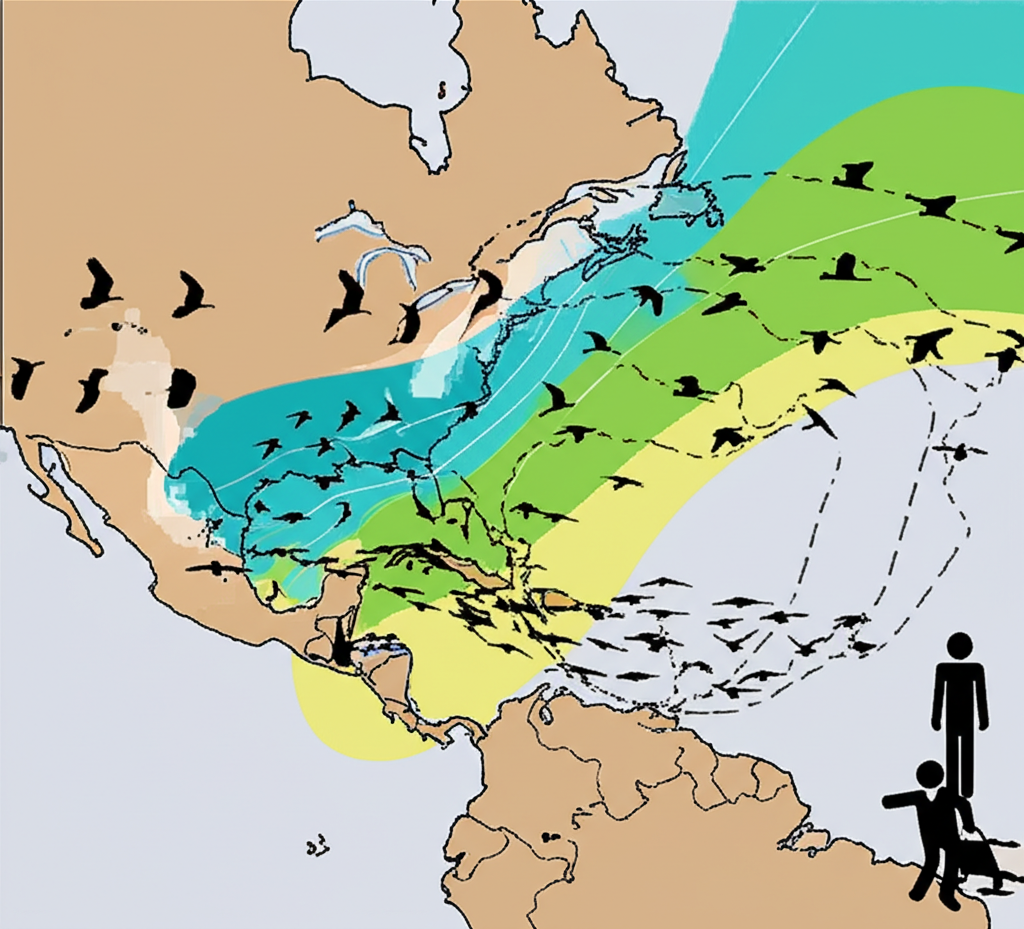
According to reports from National Geographic and recent ornithological studies, the Veery Thrush-a long-distance migrant that crosses the Gulf of Mexico in a single night's flight-has shown an ability to predict the severity of hurricane seasons. Researchers suggest that these birds adjust their breeding and migration schedules based on large-scale climate indicators. As climate change intensifies storms, making them larger and slower-moving, the data encoded in these avian journeys is becoming vital for conservation strategies and biodiversity tracking.
The Biology of Prediction
The mechanism behind the Veery's predictive power lies in its sensitivity to the environment. Research highlighted in July 2023 indicates that climate change is altering the thermodynamics of the Gulf of Mexico, a critical corridor for migratory species. The Veery, along with the Wood Thrush, navigates this perilous route annually. The Cornell Lab of Ornithology notes that Wood Thrushes return north in spring two to six times faster than their autumn departure, a journey fraught with peril if timed incorrectly against Atlantic storms.
A 2021 study published in Ornithological Applications emphasized that future climate change will significantly impact the size and location of breeding and wintering areas for migratory thrushes in South America. As these ranges shift, the monitoring of "returning songs"-the acoustic evidence of successful migration and territory establishment-becomes a proxy for the health of the hemisphere's climate system.
A World in Flux: From Birds to Humans
The disruption of migration is not limited to avian species. The same climate drivers forcing thrushes to adapt-drought, sea-level rise, and intensified hurricanes-are triggering mass human displacement. While the Veery adjusts its flight path, millions of people are being forced to move.
The Scale of Displacement
Data from the World Migration Report 2024 and the World Bank paints a stark picture of this parallel crisis:
- 216 Million: The number of people across six continents expected to move within their countries by 2050 largely due to climate change.
- 32.6 Million: The global number of people displaced by disasters at the end of recent reporting periods.
- 3.4 Million: People in the United States displaced by disasters in 2022 alone.
"Mid- to high-latitude developed countries are projected to experience increased migration inflows, and low-latitude countries with low development status are likely to see increasing migration outflows." - Nature Communications Earth & Environment, October 2025
Implications for Policy and Conservation
The intersection of wildlife tracking and human migration policy is becoming a focal point for international governance. Experts argue that the sensitivity of species like the Veery Thrush can inform broader climate resilience strategies. If birds are altering their routes due to hurricane intensification, coastal human settlements are at equal risk.
Recent policy talks, including those at COP28 and forums led by the World Bank, have highlighted the need for adaptation strategies. However, as noted by ETH Zurich in late 2024, climate change often exacerbates existing economic inequalities, which are the proximate drivers of migration. The response requires a dual approach: conservation of the biodiversity corridors that stabilize ecosystems, and the development of legal frameworks for those displaced by the environmental collapse of those same ecosystems.
Forward Outlook: The 2050 Horizon
Looking ahead, the monitoring of avian migration will likely become increasingly integrated with climate modeling. As stated in a May 2025 study in Frontiers, while weather effects on migration are documented, projecting future impacts remains a frontier of science. For the Veery Thrush, the future depends on the preservation of its wintering grounds in South America and its breeding grounds in the North.
For human society, the warning encoded in the thrush's song is clear: the environment is shifting faster than infrastructure can adapt. With internal migration driven by sea-level rise and drought set to increase, the strategies used to protect wildlife corridors may soon need to be adapted to ensure human security in a warming world.