For over two decades, as I've navigated the exhilarating and often unpredictable landscape of technology, I've witnessed countless innovations promise to fundamentally alter our daily existence. Some, like the smartphone, delivered beyond our wildest dreams. Others, despite their brilliance, have remained perpetual promises, forever 'on the cusp.' Consumer Augmented Reality (AR) glasses, for me, fall squarely into that second category today. The potential is undeniable, a seamless blend of our digital and physical worlds, but the reality for mass adoption still feels distant. As an Indian tech founder and CEO, I believe it's time to candidly assess what's truly holding us back and, more importantly, what specific technological leaps are required to transform AR glasses from a niche gadget into an indispensable everyday essential.
I'm not talking about enterprise solutions here - where AR is already proving its mettle in logistics, manufacturing, and healthcare. Those applications, while powerful, cater to specific professional needs. My focus, and indeed my passion, is on the consumer. How do we put AR glasses on the faces of millions, integrating them into our social lives, our personal productivity, and our moments of leisure, much like our mobile phones have done? The answer lies not just in incremental improvements, but in a holistic reimagination of display, battery, and design, all underpinned by an intuitive user experience.
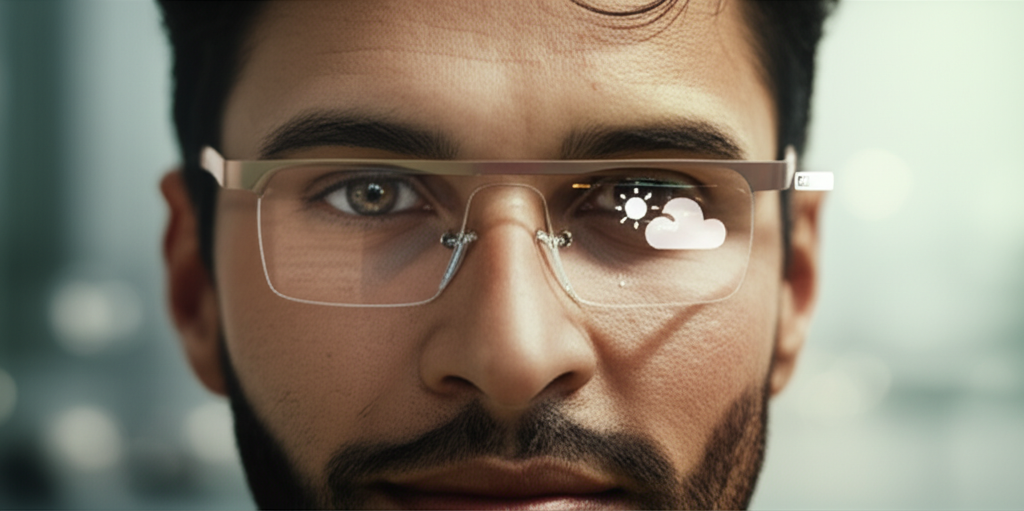
The Current State: A Vision in Progress
Let's be practical. The AR glasses we see today are often impressive engineering feats, but they come with compromises. They are either too bulky, too expensive, or their functionality is too limited for the average user to justify the investment. I remember back in the early 2000s, when I was exploring concepts for our first mobile applications, the hardware limitations were immense. We had grand ideas for location-based services and interactive content, but the devices simply weren't ready - screens were tiny, batteries lasted hours, not days, and connectivity was a luxury. It's a similar feeling with AR glasses now. The vision exists, the foundational technology is here, but the integration and refinement for daily life are still catching up.
For mass adoption, AR glasses need to be more than just a screen in front of your eyes; they need to disappear, to become an extension of your natural perception. They need to offer genuinely compelling reasons to choose them over the ubiquitous smartphone, without creating new social frictions or technological headaches. This requires breakthroughs across several core areas.
Display Technology: The Invisible Interface
The display is arguably the most critical component. Current AR glasses often struggle with field of view (FOV), brightness in varying light conditions, and the 'screen door effect' where individual pixels are visible. For true mass adoption, we need displays that are:
- Seamless and Transparent: The digital overlay must integrate perfectly with the real world, without distraction or visual artifacts. This means high resolution, perfect color fidelity, and minimal latency. Micro-LED technology holds immense promise here, offering superior brightness, contrast, and energy efficiency in tiny form factors, crucial for transparent optics.
- Wide Field of View (FOV): A narrow FOV creates a "peephole" effect, breaking immersion. We need an FOV that encompasses a significant portion of our natural vision, allowing for expansive digital content without constantly moving our heads.
- Dynamic Adaptability: The display must automatically adjust to ambient light, from bright sunlight to dimly lit rooms, maintaining clarity and visibility without manual intervention. Electrochromic dimming, as seen in some current models, is a step in the right direction.
- Prescription Integration: For billions who wear prescription glasses, AR integration must be seamless. This means either direct integration of prescription lenses into the AR optics or exceptionally comfortable over-glasses solutions.
Battery Technology: Powering All-Day Experiences
A smart device that needs recharging every few hours is a non-starter for mass adoption. Our smartphones last a full day for most users, and AR glasses must aim for similar endurance, especially considering they are worn on the face. This isn't just about bigger batteries; it's about smarter power management and fundamental advancements in energy density.
- Miniaturization and Efficiency: We need breakthroughs in solid-state batteries or other next-generation chemistries that pack more power into smaller, lighter form factors. This must go hand-in-hand with highly efficient processors and display components that draw minimal power.
- Optimized Power Management: Intelligent AI-driven power management systems that learn user habits and prioritize essential functions, putting dormant features into ultra-low power states, will be critical.
- Convenient Charging: Beyond mere battery life, charging solutions need to be effortless-think wireless charging built into everyday objects like desks or car dashboards, minimizing user friction.
Design and Ergonomics: The Unnoticed Companion
This is where many current AR glasses stumble. No matter how advanced the tech, if it looks cumbersome, feels heavy, or draws unwanted attention, it won't be adopted by the masses. As a leader, I've always stressed that technology should serve humanity, not make it feel like a human is serving the tech. Design is paramount for consumer acceptance.
- Lightweight and Balanced: AR glasses must weigh no more than traditional spectacles, and the weight must be evenly distributed to prevent fatigue during all-day wear.
- Stylish and Customizable: They need to look good. Partnering with fashion brands, offering diverse styles, colors, and interchangeable components will move them from 'gadget' to 'fashion accessory.' Meta's partnership with Ray-Ban is a strong example here, showing that consumers embrace AI wearables when they provide real utility in a desirable form factor.
- Durability and Comfort: Daily wear means they must withstand drops, splashes, and general wear and tear, while remaining comfortable on different face shapes and sizes.
- Social Acceptability: This is a critical psychological barrier. The presence of cameras or sensors needs to be subtle, and the user experience must be designed to avoid making wearers feel isolated or others feel observed.
Beyond Hardware: The Ecosystem and AI Imperative
Hardware is only one piece of the puzzle. The true value of AR glasses will be unlocked through a rich, intuitive, and secure ecosystem. This means sophisticated AI, robust software platforms, and compelling applications that enhance real-world interactions rather than replace them.
AI integration is already a strong focus for 2025 models, offering features like object recognition, real-time task direction, and voice command. The Vuzix partnership with Ramblr is a prime example of AI-powered task assistants in enterprise. For consumers, this translates to proactive, contextually aware assistance: instant translations, on-demand information about landmarks, discreet notifications, and perhaps even AI companions that learn and adapt to our needs.
For AR glasses to truly achieve mass adoption, we must shift our focus from merely displaying digital content to seamlessly augmenting human capability and experience, making the technology disappear into the background of everyday life.
My Leadership Lens: Cultivating the AR Ecosystem
My career, spanning over 25 years, has given me a deep appreciation for the long game in technology. I recall an early project where we were trying to integrate what we then called 'context-aware computing' into handheld devices for field agents. The vision was powerful: imagine real-time data overlays on their work environment, hands-free operation, and instant information. But the devices were clunky, the processing power was inadequate, and the battery life was abysmal. We spent more time troubleshooting hardware than developing innovative software. It taught me a profound lesson: a visionary product is only as good as its weakest link, and often, that link is the underlying hardware's readiness for its intended use case.
Today, as I consult with startups and established players in India and globally, I emphasize that building a compelling AR future requires more than just engineering prowess. It demands foresight, collaboration, and an unwavering commitment to the user experience. It's about:
- Investing in Foundational Research: Support breakthroughs in materials science, battery chemistry, and micro-optics.
- Fostering Cross-Industry Partnerships: Tech companies need to collaborate with fashion houses, eyewear manufacturers, and content creators.
- Prioritizing Privacy and Trust: Building robust data protection and transparent usage policies from day one is non-negotiable for consumer trust.
- Cultivating a Diverse Application Ecosystem: Encourage developers to create practical, everyday applications that solve real problems or enhance experiences in meaningful ways, rather than just flashy demos.
The market potential is undeniable. According to industry forecasts, the global AR glasses market is projected to grow substantially, with hardware volumes potentially reaching 43.1 million units by 2029, representing a compound annual growth rate (CAGR) of 31.8% (IDC, January 2025). This trajectory demands strategic vision and execution.
| Feature | Current AR Glasses (Typical 2025 Range) | Ideal for Mass Adoption |
| Weight | ~70-150 grams (e.g., Patriot ViewPoint at 1.2 lbs / ~540g for specialized) | < 50 grams (similar to regular glasses) |
| Battery Life (Active Use) | ~2-5 hours | > 12 hours (all-day) |
| Field of View (FOV) | ~30-50 degrees | > 80 degrees (immersive) |
| Resolution (per eye) | 1080p - 2.5K | 4K+ with high pixel density |
| Price (Consumer) | ~$299 (AI-only) to $799+ (with display) | < $200 (for core functionality) |
| AI Integration | Basic voice, capture, some context | Proactive, predictive, deeply contextual |
(Data based on a synthesis of 2025 market reports and industry analyst projections for mass-market consumer needs)
The Future is Always Now: Your Role in AR's Evolution
The journey of AR glasses from speculative fiction to a pervasive part of our lives is not a question of 'if,' but 'when.' And 'when' depends directly on how effectively we, as innovators, leaders, and consumers, address these fundamental challenges. My experience has taught me that true transformation happens when a technology becomes so seamless, so intuitive, and so indispensable that we stop noticing the technology itself, and instead, focus on the enhanced experiences it enables.
For developers, for entrepreneurs, for investors - the opportunity is immense. The Asia Pacific region, with its vast customer base and rapid embrace of internet-based platforms, is poised to emerge as a leader in this market (Future Market Insights). This is not just about building a product; it's about crafting an entirely new paradigm of human-computer interaction, one that respects our physical world while enriching it with digital intelligence. The vision is clear: AR glasses that are indistinguishable from regular eyewear, powered by invisible yet brilliant technology, offering genuine, everyday utility. Let us, together, commit to making that future a reality, not just a promise.
What are your thoughts? What feature, above all else, would compel you to integrate AR glasses into your daily life? Share your perspective, and let's shape this future together.