The global automotive landscape is witnessing a significant strategic shift as MG Motor, backed by Chinese parent company SAIC, officially re-enters the sports car segment with the all-electric Cyberster. This launch represents more than a product release; it is a calculated geopolitical and technological maneuver to disrupt a market niche traditionally dominated by European and Japanese legacy manufacturers. By positioning the Cyberster against established benchmarks like the Porsche 718 Boxster and the Mazda MX-5, MG is testing the elasticity of brand heritage against modern electric vehicle (EV) performance metrics.
According to recent market data from early 2024 to 2025, the Cyberster has arrived with a pricing strategy that undercuts premium German rivals while offering acceleration figures previously reserved for supercars. However, the critical reception highlights a widening divergence between raw electric performance and the traditional driving dynamics valued by enthusiasts. This report analyzes the pricing structures, technological specifications, and market implications of the Cyberster's global rollout.
The Numbers: Pricing and Specifications Timeline
The rollout of the MG Cyberster has provided concrete data on how electric sports cars will be priced in the near future. In the United Kingdom, a key market for the brand's heritage, the pricing structure has been confirmed with aggressive intent.
- October 2024: PistonHeads and other UK outlets confirmed the Cyberster GT price at £59,995. This model features a dual-motor setup producing 503hp.
- November 2024: EVNews reported the entry-level "Trophy" model starting at £54,995. This single-motor variant delivers 335hp.
- January 2025: Australian markets received the Cyberster with a starting price of approximately $115,000 AUD, significantly higher due to import structures and luxury car taxes.
- February 2025: New Zealand Autocar reviewed the vehicle with a listed price of $129,000 NZD.
To understand the market disruption, one must look at the performance-per-dollar ratio. The Cyberster GT claims a 0-62mph (0-100km/h) time of 3.2 seconds. In contrast, a Porsche 718 Boxster, which starts at a similar price point of around £53,000 to £56,000, offers significantly less horsepower and slower straight-line acceleration in its base combustion configuration.
Comparative Market Analysis
The following table synthesizes data from EV Database, Carfolio, and manufacturer specifications to illustrate the competitive landscape.
| Feature | MG Cyberster GT (EV) | Porsche 718 Boxster (Base ICE) | Mazda MX-5 (ICE) |
| Approx. Price (UK) | £59,995 | ~£56,000 | ~£28,000 - £32,000 |
| Power | 503 hp (375 kW) | 300 hp | 181 hp (2.0L) |
| 0-62 mph | 3.2 seconds | ~5.1 seconds | 6.5 seconds |
| Weight | 1,985 kg | ~1,365 kg | ~1,050 kg |
| Drivetrain | AWD (Dual Motor) | RWD (Mid-Engine) | RWD (Front-Engine) |
Value Proposition vs. Performance Reality
The data reveals a sharp dichotomy. For the price of an entry-level Porsche, MG offers performance metrics that rival the Porsche 911 Turbo of a decade ago. However, the weight penalty is severe. At 1,985kg, the Cyberster is nearly double the weight of a Mazda MX-5, fundamentally altering the physics of the driving experience.
"The MG Cyberster GT is missile-like fast in a straight line, but all that performance comes at the expense of driving enjoyment." - Stuart Masson, The Car Expert
Expert Perspectives and Stakeholder Views
The automotive press has been divided, reflecting a broader industry tension between traditional engagement and modern capability.
The Design Advocates: Reviews from WhichEV highlight the aesthetic success, noting that the car is a "true modern electrified expression of what the MG brand historically has been all about." The scissor doors and triple-screen cockpit are cited as high-value features that usually command six-figure prices.
The Dynamic Purists: Conversely, outlets like Evo and Goodwood have expressed skepticism regarding the chassis tuning. Evo described the car as "stunning to look at, but not to drive," pointing to the inherent difficulty of masking a two-tonne curb weight on a winding road. Goodwood's analysis noted that performance feels "strange," with acceleration tapering off at higher speeds, a common trait in EVs optimized for 0-60 sprints rather than sustained Autobahn velocities.
The Value Analysts: CarSales and Electrifying.com focus on the market placement. They argue that while the Porsche 718 Boxster is the dynamic benchmark, the entry-level 2.0-litre Boxster "comes nowhere close to matching the MG for straight-line performance." For buyers prioritizing traffic-light acceleration and curb appeal over apex-clipping precision, the Cyberster represents a unique value proposition.
Implications: Technology, Business, and Society
Technological Maturity
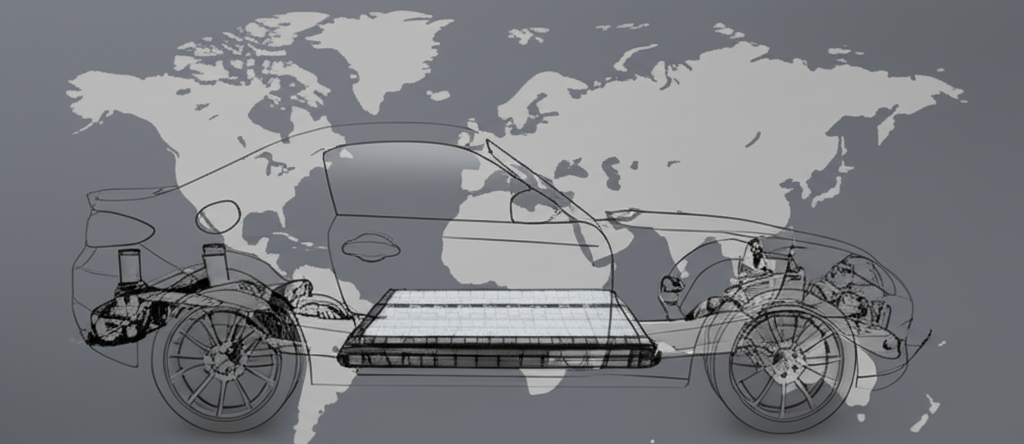
The Cyberster utilizes a 77kWh battery (74.4kWh usable), providing a WLTP range of roughly 276 miles for the GT. This highlights the current plateau in battery density; achieving acceptable range for a grand tourer still necessitates heavy battery packs, which directly conflicts with the ethos of a light sports car. The "Cyber Cube" platform demonstrates SAIC's ability to package high-performance EV components into a roadster form factor, a feat few other manufacturers have achieved at this price point.
Business and Geopolitics
The MG Cyberster is a flagship product for China's automotive export strategy. By reviving a beloved British marque with state-of-the-art Chinese EV technology, SAIC is attempting to bypass the brand prejudice that often affects new entrants. This car competes in the "emotional" segment of the market, traditionally the stronghold of European engineering. Its existence places pressure on Porsche to deliver its upcoming electric 718 Boxster/Cayman at a competitive price point, though experts predict Porsche will aim for a higher premium.
Final Verdict: The Best Value Sports Car?
Based on the comparative data and expert consensus, the verdict on the MG Cyberster is nuanced. If the definition of "value" is derived strictly from horsepower, acceleration, and standard equipment (scissor doors, infotainment tech) per dollar, the MG Cyberster GT is arguably the best value sports car on the market today. It offers hypercar acceleration for the price of a mid-spec executive sedan.
However, if value includes driving engagement, chassis feedback, and the lightweight agility associated with the roadster lineage, the Mazda MX-5 remains the superior choice for the purist, at nearly half the price. For those seeking a balance of badge prestige and handling, the Porsche 718 Boxster retains its crown, albeit at a severe deficit in straight-line speed and technology compared to the MG.
Outlook: What Happens Next?
The launch of the Cyberster is merely the opening salvo in the electric roadster wars. The immediate future involves the release of Porsche's electric 718, which regulators indicate is imminent. This will be the first direct competitor to the Cyberster in terms of powertrain.
Furthermore, Polestar represents another upcoming challenger in this space. For MG, the next steps will likely involve software updates to refine power delivery and potentially a lighter, more focused variant to address the weight criticisms. As it stands, the Cyberster has successfully proven that the electric future of the sports car can be exciting, accessible, and distinct, even if it hasn't yet fully replicated the magic of its lightweight combustion ancestors.