SHENZHEN - In a move that threatens to upend the competitive landscape of the global electric vehicle market, Chinese automotive giant BYD has officially unveiled a charging technology so fast it effectively renders the convenience gap between gasoline and electric cars obsolete. During a livestreamed event on March 17, 2025, company founder Wang Chuanfu introduced the "Super e-Platform," a new architecture capable of supporting peak charging speeds of 1,000 kilowatts (kW)-a figure that dwarfs current industry standards.
The announcement marks a pivotal moment in the infrastructure race. According to the company, this new system can replenish 400 kilometers (approximately 249 miles) of driving range in just five minutes. To put this in perspective, that equates to adding range at a staggering speed of two kilometers every second. For decades, "range anxiety" and long charging times have been the primary bottlenecks for mass EV adoption. BYD's latest breakthrough suggests those barriers are rapidly crumbling.
Anatomy of a Megawatt: The Tech Behind the Speed
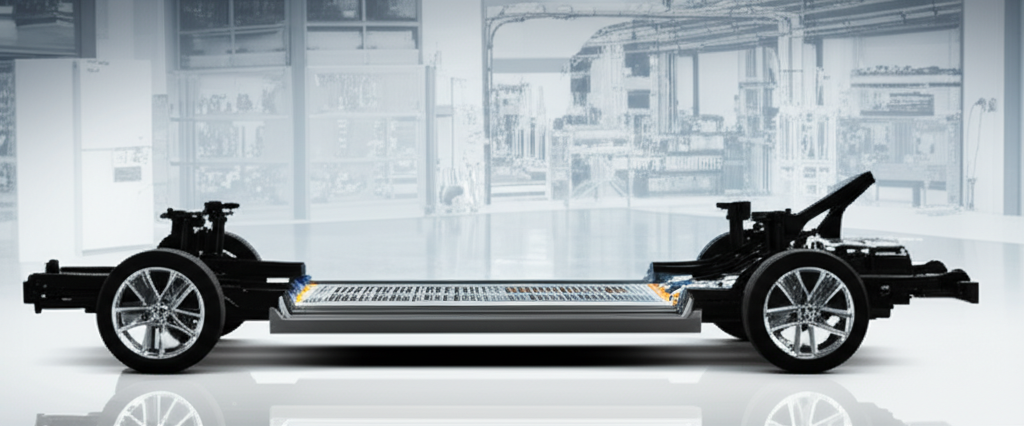
The specifications released by BYD reveal a comprehensive overhaul of traditional EV architecture. The Super e-Platform is not merely a bigger battery; it is a holistic integration of new materials and engineering.
According to reports from Electrek and The Verge, the system utilizes a 1,000-volt architecture combined with a massive 1,000-amp current. This allows it to hit that elusive megawatt (1,000 kW) charging peak. The platform incorporates several key innovations:
- Flash-Charging Batteries: Specialized cells designed to accept high current without overheating.
- Silicon Carbide (SiC) Chips: Advanced power electronics that manage heat and efficiency better than traditional silicon.
- Dual-Gun Charging: As noted by The Electric Car Scheme, the system uses dual DC charging plugs simultaneously to achieve the 1,000 kW throughput, overcoming the physical limitations of a single cable connector.
"BYD... officially releases flash charging battery with ultra-high voltage of 1000V, ultra-large current of 1000A and ultra-large power of 1000kW." - BYD Official Statement
Infrastructure Blitz: 4,000 Stations Planned
Technology in a lab is one thing; technology on the roadside is another. BYD is moving aggressively to deploy this hardware. Reports from CarNewsChina indicate that the first 500 ultrafast charging stations were scheduled for deployment starting in April 2025, with a broader plan to construct over 4,000 stations across China.
Crucially, BYD is addressing grid limitations-a common criticism of high-power charging. The new stations feature built-in energy storage integration. This allows the station to draw power from the grid at a steady rate, store it, and then "flash" it into the vehicle at high speeds without destabilizing the local power network. This feature is essential for bringing megawatt charging to areas with weaker electrical infrastructure.
The Global Divide: European Hurdles
While this development solidifies BYD's dominance in the domestic Chinese market, international implications are complex. Electrifying.com highlights a significant hurdle for European expansion: the Combined Charging System (CCS) standard widely used in the EU is currently specified to limit maximum power to 500 kW. To utilize BYD's full 1,000 kW potential, European infrastructure would require significant updates or a shift in connector standards, creating a potential technological bifurcation between East and West.
Expert Analysis: Challenging Tesla's Throne
Industry observers view this move as a direct challenge to Tesla, the long-reigning king of EV infrastructure. Online communities and analysts have noted that BYD's claimed speeds are approximately double that of Tesla's V4 Supercharger technology. The Verge reported that while Tesla has focused on the ubiquity of its network, BYD is now winning on raw throughput specs.
However, experts caution that the "megawatt" capability is currently limited by the vehicle's battery management system (BMS). While the chargers can technically output up to 1,360 kW, current compatible vehicles like the Han L and Tang L are capped at receiving 1,000 kW. Even with this cap, the speed is revolutionary, effectively mirroring the time it takes to pump gas.
Future Outlook
As we look toward the latter half of 2025 and into 2026, the rollout of these stations will likely force competitors to accelerate their own R&D. If BYD successfully scales this network, the psychological barrier to EV entry-the fear of being stranded or waiting hours to charge-may finally be dismantled.
The question remains: Can Western markets adapt their grids and standards fast enough to keep up, or will ultra-fast charging become a luxury primarily available to the Chinese market? For now, BYD has set a new speed limit for the industry-and it is blisteringly fast.