SAN FRANCISCO - In a stark acknowledgment of shifting power dynamics within the artificial intelligence sector, OpenAI CEO Sam Altman has declared an internal "Code Red," mobilizing the company's workforce to prioritize the immediate fortification of its flagship product, ChatGPT. According to internal memos circulated on Monday, December 2, 2025, and reviewed by multiple media outlets, the directive signals a significant strategic pivot. The company is reportedly halting development on revenue-generating features, including advertising and non-core products, to marshal all available resources toward closing capability gaps with surging rivals, most notably Google.
The move marks a dramatic reversal of the industry landscape from just three years ago, when Google issued its own "Code Red" following the viral success of ChatGPT. Now, facing intensified pressure from Google's Gemini ecosystem and Anthropic's Claude, OpenAI is postponing initiatives such as its "Pulse" personal assistant, video generation tool Sora, and planned advertising networks. Instead, the focus has shifted entirely to enhancing the speed, reliability, and reasoning capabilities of ChatGPT.
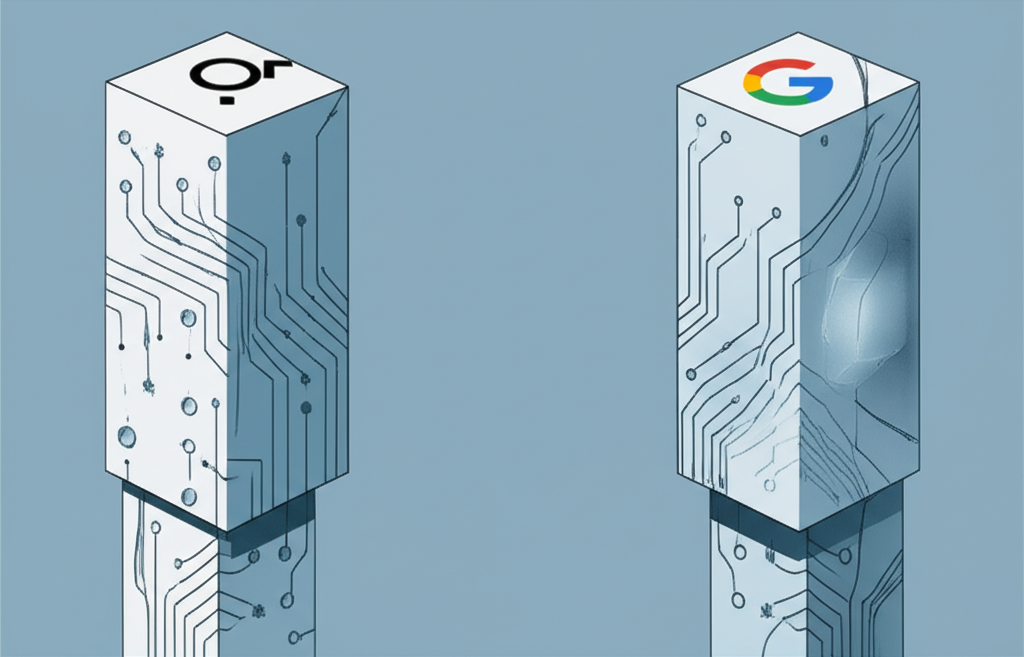
This internal mobilization suggests that while OpenAI maintains a stronghold in the enterprise sector-evidenced by recent data showing an 8x growth in corporate message volume-its dominance in consumer-facing model capability is under legitimate threat. For users, this signifies a period of rapid change, where usability improvements will likely take precedence over commercial expansion.
The Mechanics of the 'Code Red' Pivot
The directive issued by Altman is not merely a slogan but a restructuring of immediate operational priorities. Reports from The Information and The Wall Street Journal indicate that the alert level was raised from a previous "code orange" to "code red" early this week. This escalation necessitates a freeze on several projects that were previously viewed as the next phase of OpenAI's ecosystem expansion.
"Altman told employees that OpenAI must immediately shift resources to improve the quality, speed, and reliability of ChatGPT... delaying initiatives like ads, shopping and health agents."
The specific timeline of events reveals a company reacting swiftly to competitive data:
Key Developments Timeline
- Dec 02, 2025: Sam Altman issues the "Code Red" memo, effectively pausing work on the "Pulse" assistant, Sora video generator, and health/shopping agents.
- Dec 03, 2025: Reports confirm that a new reasoning model is expected to launch imminently, possibly as early as next week, to counter perceived stagnation in model performance.
- Dec 08, 2025: To assuage market concerns, OpenAI releases enterprise data showing massive growth, attempting to balance the narrative of technical vulnerability with commercial success.
Implications for ChatGPT Users
For the millions of daily active users, this internal pivot translates to tangible changes in the user experience, potentially bifurcating the roadmap for free and Plus subscribers.
A Reprieve from Ads
Perhaps the most immediate consumer impact is the delay of advertising within the platform. OpenAI had been actively exploring ad-based revenue models to offset its immense computing costs. The decision to halt this effort suggests that leadership fears degrading the user experience at a time when user retention is critical. A cluttered interface could drive users toward Google's Gemini or Anthropic's Claude, which are aggressively courting the same user base.
Accelerated Feature Rollouts
The "Code Red" is explicitly aimed at "improving quality, speed, and reliability." Users should expect a departure from the recent trend of broad, multi-modal feature expansion (like voice and vision integration) back toward core intelligence improvements. Sources indicate a new reasoning model is imminent. For Plus subscribers, this likely means early access to a model that hallucinates less and handles complex logic better, directly addressing the areas where competitors have claimed recent victories.
The Business of Survival: Why Now?
The urgency of Altman's directive is underscored by the financial and infrastructural stakes. As noted in discussions across industry forums and Reddit analysis, OpenAI has committed to approximately $1.4 trillion in infrastructure build-outs over the coming years. Meeting these commitments requires sustained, exponential growth. If Google's Gemini 3 captures the narrative of being the "superior" model, OpenAI risks a valuation compression that could jeopardize its funding pipeline.
This is not merely about bragging rights; it is about the commoditization of intelligence. If users perceive Google's offerings as equivalent or superior-and integrated natively into the Google Workspace ecosystem-OpenAI's standalone advantage diminishes. By delaying "Pulse" and shopping agents, OpenAI is admitting that a diversified product line is worthless if the core engine driving it is second-best.
"OpenAI thought they'd stay ahead... Now playing catch up. It's not just competitive. Existential." - Analysis via Reddit/r/ArtificialIntelligence
Expert Perspectives and Market Outlook
Industry analysts suggest that this moment was inevitable. The "first-mover advantage" in AI is proving less durable than in social media or operating systems. According to reports from TechCrunch and Reuters, while OpenAI boasts an enterprise win with 8x growth in usage, the underlying technology is witnessing rapid convergence.
The delay of the Sora video generator is particularly telling. A year ago, Sora was the industry darling. Its pause suggests that OpenAI cannot afford the computational overhead or the engineering distraction of video while the text-and-reasoning battlefield is under fire. The company is effectively burning the furniture to heat the house, betting everything that a refocused effort on ChatGPT will re-establish a clear lead.
What Happens Next?
In the short term, users should watch for the release of the unannounced reasoning model, hinted at in the leaked memos. If this model delivers a step-change in capability-specifically in coding, mathematics, and complex logic-the "Code Red" will be vindicated. However, if the new updates offer only incremental gains, the narrative that Google has caught up will solidify.
For the broader technology ecosystem, 2026 is shaping up to be a war of attrition. With ads delayed, OpenAI remains dependent on subscription revenue and investment capital, raising the stakes for every product release. The era of easy dominance for ChatGPT is over; the era of fighting for every prompt has begun.