INDIANAPOLIS - In what industry analysts are calling the most aggressive manufacturing expansion in pharmaceutical history, Eli Lilly and Company is pouring tens of billions of dollars into global production facilities to quench the world's thirst for its blockbuster weight-loss and diabetes treatments. The company's strategic gamble to scale production of tirzepatide-the active ingredient in Zepbound and Mounjaro-has propelled it to become the first drugmaker to surpass a $1 trillion market valuation.
The urgency is palpable. With demand for GLP-1 medications outstripping supply for years, Lilly has committed a staggering sum-reported by Xtalks to reach $27 billion by early 2025-to expand domestic and international capacity. This capital injection is not merely about building factories; it is a high-stakes logistical operation aimed at securing dominance in a metabolic drug market that few predicted would explode with such ferocity.
"Just a handful of years ago, nobody would have imagined the metabolic market for the GLP-1 drugs that has emerged," said David Ricks, Lilly's CEO, in an interview cited by BioPharma Dive. Yet, the company's pivot to massive infrastructure spending suggests they are now banking on this market defining the next decade of healthcare.
Mapping the Billions: A Global Infrastructure Blitz
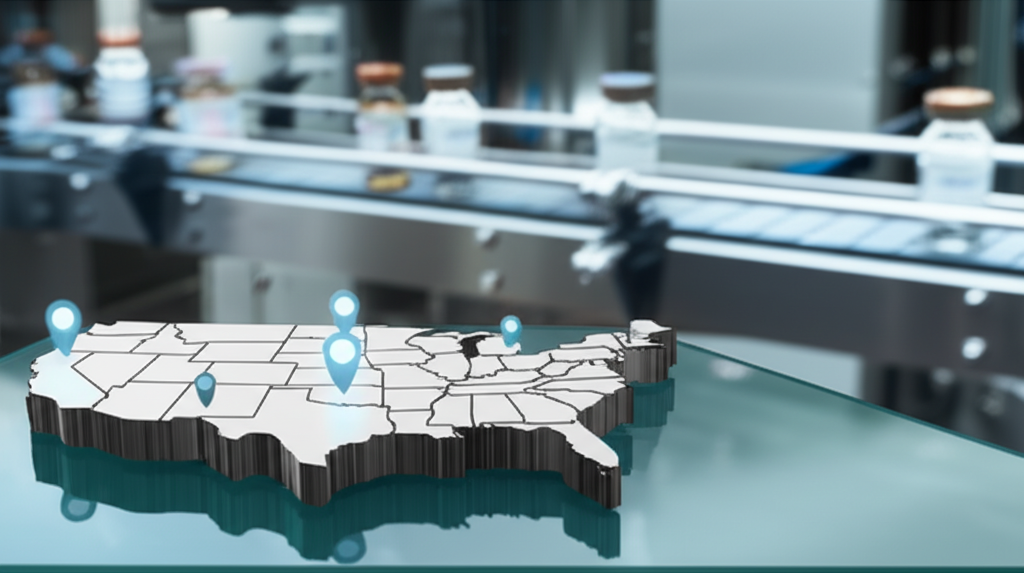
The scale of Lilly's investment is best understood through its rapid geographical expansion. According to data from BioPharma Dive and Bloomberg, the centerpiece of this strategy is the LEAP Research and Innovation District in Lebanon, Indiana.
The Indiana Stronghold
In May 2024, Lilly announced an additional $5.3 billion investment in its Lebanon site, bringing the total commitment there to $9 billion. This facility is dedicated to manufacturing active pharmaceutical ingredients (API), the bottleneck in the supply chain. By October 2024, CNBC reported plans for an adjacent $4.5 billion research and manufacturing center, further cementing Indiana as the nerve center of Lilly's operations.
Expanding the Map
Beyond its home state, the company has aggressively diversified its footprint:
• Wisconsin: In December 2024, Lilly committed $3 billion to expand a plant in Pleasant Prairie, Wisconsin, according to Reuters.
• Germany: A $2.5 billion facility in Alzey was confirmed to support injectable drugs and devices.
• Ireland: A $1.8 billion infusion into Irish operations was announced in September 2024 to bulk up European production.
The Strategic Gamble Behind the Boom
This spending spree was not a reactionary move but a calculated risk. According to InkFreeNews, Lilly embarked on this manufacturing expansion as early as 2020, driven by promising research results for tirzepatide. The decision was made "at risk"-meaning the company began building billion-dollar factories before the drugs were even approved by regulators.
"Lilly's aggressive investments in manufacturing come as the FDA remains undecided about the shortage status of tirzepatide-leaving the door open [for compounders]." - BioSpace
This proactive strategy has proven essential. PharmaSource reports that in late 2023, Lilly also partnered with Switzerland-based CordenPharma in a contract worth approximately $1 billion to produce active ingredients. Without these early moves, the shortages that have plagued patients worldwide could have been significantly worse.
Economic and Healthcare Implications
The massive outlay of capital has broader implications beyond corporate profits. Economically, these investments represent a significant reshoring of high-tech manufacturing to the United States. The $9 billion Indiana site and the $3 billion Wisconsin expansion are creating thousands of high-skilled jobs in the Midwest.
From a healthcare perspective, the race to scale production is critical for patient access. Shortages of Zepbound and Mounjaro have forced many patients to turn to compounding pharmacies, a practice that exists in a regulatory gray area. By boosting official supply, Lilly aims to close the door on compounders and regain full control over the quality and distribution of tirzepatide.
The Trillion-Dollar Milestone
The market has rewarded this execution. As reported by OncoDaily and BioPharma Dive, Eli Lilly became the first pharmaceutical company to hit a $1 trillion market value in late 2025. CEO David Ricks noted in an earnings call that the "$23 billion investment in manufacturing capacity is paying off," citing the ability to meet growing GLP-1 demand as the primary driver of this financial historic moment.
What Comes Next?
Looking ahead, the focus shifts from ground-breaking to operational ramp-up. While the investments have been announced, the physical reality of pharmaceutical manufacturing means lag times remain. The new facilities in Indiana and Germany will need to come online and pass rigorous regulatory inspections before they can fully impact global supply levels.
Furthermore, with a raised 2024 forecast and quarterly sales crossing $1 billion for Zepbound alone, pressure will remain high. Lilly must navigate the delicate balance of expanding its current portfolio while preparing its production lines for the next generation of pipeline medicines, ensuring that the infrastructure built today can support the innovations of tomorrow.