SHANGHAI - The era of "charging anxiety" may finally be drawing to a close, replaced by a new competitive front in the electric vehicle (EV) sector: the race for the five-minute fill-up. As 2025 draws to a close, major breakthroughs from Chinese automotive giants have shattered previous limitations, with BYD and Zeekr unveiling technologies that promise to make recharging an EV as fast as filling a gas tank. These developments, which include 1,000 kW+ peak charging speeds and smart pavement integration, are reshaping the geopolitical landscape of clean energy transportation and placing immense pressure on Western competitors like Tesla.
According to reports from The Verge and Carbon Credits in March 2025, BYD has revealed a proprietary fast-charging technology capable of adding 400 kilometers (approximately 249 miles) of range in just five minutes. This capability, set to debut in the Han L sedan and Tang L SUV, significantly outperforms the current industry benchmarks. For context, Tesla's Supercharger network, long considered the gold standard in the West, typically requires about 15 minutes to deliver 172 miles of range. This leap in efficiency signals a maturation of battery chemistry and thermal management that experts argue is critical for mass adoption.
The Kilowatt War: China Leading the Charge
The push for speed is not limited to BYD. In late 2025, premium EV brand Zeekr, a subsidiary of Geely, unveiled what is arguably the most powerful passenger vehicle charger to date: a 1.2 MW (megawatt) fully liquid-cooled system. As reported by Bolt Earth, this technology represents the bleeding edge of the industry's shift toward ultra-fast charging architectures. While American networks like Electrify America and Ionity have been expanding their 350 kW chargers-capable of adding 200 miles in 15 minutes according to The Next Avenue-the Chinese market is rapidly moving toward the megawatt scale.
"BYD's new battery outperforms them all, making it the fastest-charging battery available. ... This breakthrough has had an immediate impact on the stock market." - Carbon Credits
These advancements are supported by aggressive battery innovation. Fyma reports that solid-state batteries are finally moving toward the mainstream, offering higher energy density and improved safety profiles that allow for these extreme charging speeds without degrading battery life. Concurrently, competitors like XPeng are deploying 5C and 5.5C charging systems, creating a domestic ecosystem in China where sub-10-minute charging sessions are becoming the norm.
Beyond the Plug: Wireless Roads and Grid Storage
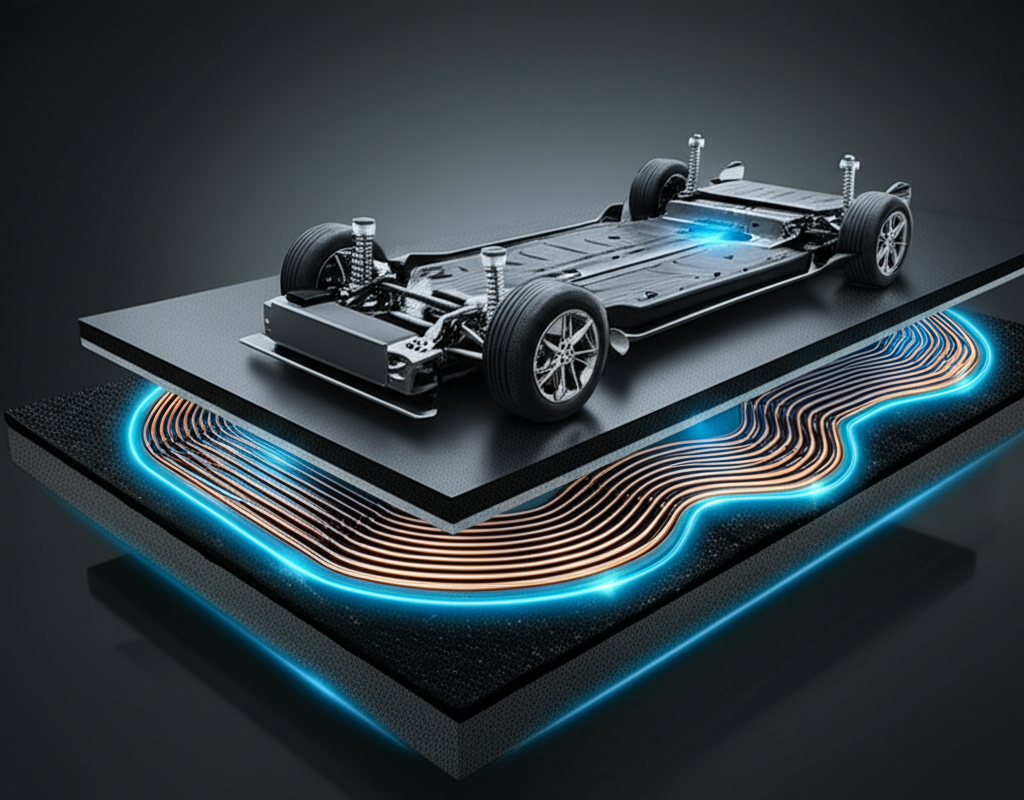
While speed is the headline, convenience is the long-term goal. Evchargingsummit and the World Economic Forum highlight the rising prominence of inductive charging-essentially "smart pavement." This technology involves embedding charging coils within concrete road panels, allowing vehicles to charge wirelessly while driving or parked. While still in nascent stages compared to plug-in infrastructure, 2025 has seen increased testing and validation of these systems, which could eventually eliminate the need for stops entirely on major freight corridors.
However, pumping megawatts of power into vehicles places immense strain on local electrical grids. To mitigate this, MOTORWATT reports a surge in the deployment of battery buffer systems. These large, stationary battery installations store energy from the grid (or renewable sources) during low-demand periods and release it rapidly into vehicles during charging sessions. This infrastructure allows ultra-fast charging stations to operate even in areas where the local grid connection is insufficient to support high-power draws directly.
Market Implications and Consumer Adoption
The stakes for these technological leaps are high. Sparkion notes that by the end of 2024, EVs were projected to account for one in five cars sold worldwide. As 2026 approaches, the differentiation between brands is shifting from range-which has largely been solved by 300-mile+ batteries-to charging speed and ecosystem integration.
In the US, Lucid Motors continues to lead domestic efficiency metrics. TopSpeed highlights that the Lucid Air utilizes a 900V+ architecture and a 350 kW charger to remain competitive. Meanwhile, Ford and other legacy automakers are leaning into bidirectional charging (V2G), as noted by The Next Avenue, allowing vehicles like the F-150 Lightning to power homes during outages-a feature that resonates with consumers facing increasingly unstable weather patterns.
Outlook: The Road to 2026
Looking ahead, the industry is poised for a consolidation of standards. S44 emphasizes that 2025 has been a year of standardization, ensuring that new fast chargers are compatible with a wider array of vehicles. The "fierce" competition described by Green Mountain Energy between traditional automakers and specialists like Tesla and Rivian is driving prices down and tech specs up.
As we move into 2026, the focus will likely expand to heavy-duty transport. With Zeekr's 1.2 MW chargers paving the way, the infrastructure is being laid for diesel-electric semi-trucks to operate with the same uptime as their fossil-fuel counterparts. The technology exists; the challenge now lies in the rapid deployment of infrastructure to support a fleet that is charging faster than ever before.