WASHINGTON - In a stark reversal of previous semiconductor trade policies, the United States government has authorized Nvidia to resume exports of its high-performance H200 artificial intelligence chips to China. The decision, announced by President Donald Trump on Monday, comes with a significant caveat: a mandatory 25% fee on all sales, payable directly to the U.S. government. The move signals a shift from a strategy of total exclusion to one of regulated revenue generation, though reports indicate that Beijing may intervene to limit the influx of American technology.
The authorization allows Nvidia to ship the H200-described by recent reports as the company's "second-best" AI processor-to a whitelist of "approved customers" within China. While the decision has buoyed Nvidia's stock and opened the door to billions in potential revenue, it has also sparked intense debate regarding national security, the pace of China's AI development, and the future of global tech supply chains.
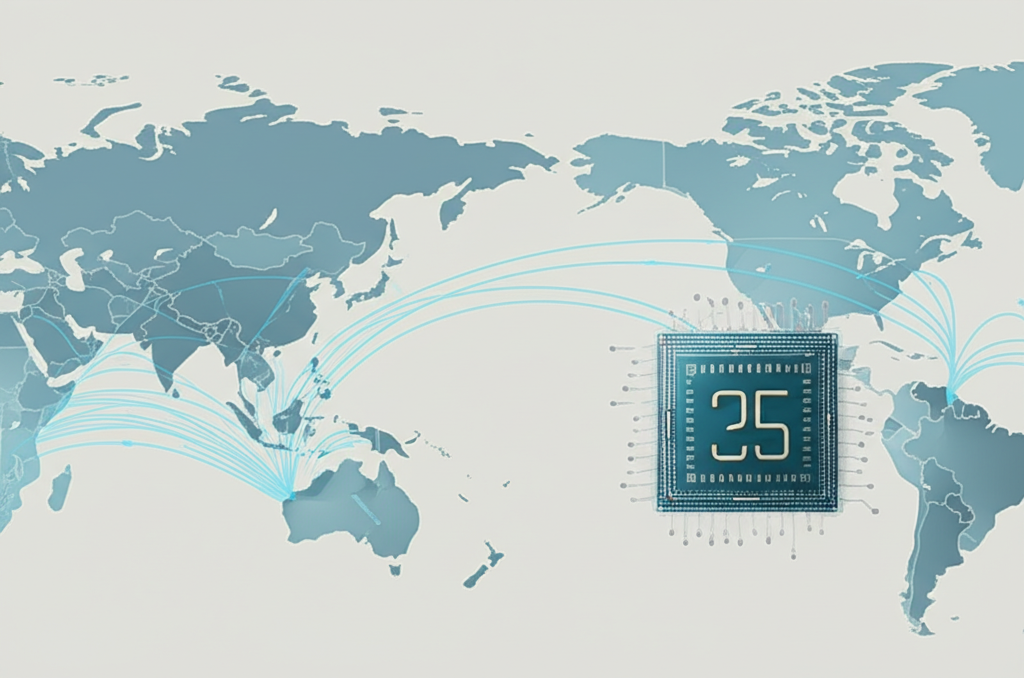
A Strategic Pivot: From Ban to Tariff
According to Reuters, the new policy framework permits the export of H200 processors provided the manufacturer pays a 25% royalty on the sales proceeds. This "surcharge" model represents a departure from the absolute export bans that characterized the previous administration's approach to cutting-edge silicon.
President Trump, utilizing his Truth Social platform, stated that he had informed Chinese President Xi Jinping of the decision. The administration contends that the sales will be conducted under conditions that "allow for continued strong National Security," according to CNN Business. By restricting sales to approved entities, Washington aims to prevent the chips from fueling China's military modernization while still allowing U.S. companies to capture value from the Chinese commercial market.
The Hardware in Question
The H200 is a critical component in the training of large language models (LLMs) and generative AI systems. Semafor reports that these chips are "powerful" tools that could significantly accelerate AI workloads. By allowing their export, even with a tariff, the U.S. is effectively loosening the bottleneck that has constrained Chinese tech giants.
"The U.S. will allow Nvidia to export its H200 data center accelerators to 'approved customers' in China... subject to a revenue-sharing condition that allocates 25% of sales proceeds to the U.S. government." - TechPowerUp
Beijing's Resistance and Self-Sufficiency
Despite the green light from Washington, the transaction may not be seamless. Financial Times and Capital Brief report that Chinese regulators are expected to limit access to Nvidia's H200 chips domestically. This resistance stems from Beijing's broader strategic goal of achieving semiconductor self-sufficiency. Relying on tariff-laden U.S. chips contradicts China's push to bolster its own domestic chipmakers, such as Huawei and SMIC.
Analysts suggest that while Chinese tech firms are desperate for the compute power the H200 offers, the Chinese government may view the 25% surcharge as a humiliating tax or a strategic vulnerability. Consequently, the "huge market" Nvidia anticipates may be tempered by internal Chinese regulatory hurdles.
Market and Industry Implications
The announcement had an immediate impact on financial markets. Bloomberg notes that the move allows Nvidia to potentially regain billions of dollars in lost revenue. Nvidia shares gained following the news, reflecting investor optimism about reopening access to one of the world's largest semiconductor markets.
Supply Chain Constraints
However, the resumption of sales to China raises questions about global supply. Network World points out that this policy shift could redirect global demand toward China, intensifying competition for already limited GPU inventories. Enterprise customers in the U.S. and Europe may face tighter supplies if Nvidia reallocates a significant portion of its H200 production to satisfy Chinese orders.
The Smuggling Factor
The strict "approved customer" list aims to mitigate the risk of diversion, but enforcement remains a challenge. CNBC reported on the same day that U.S. attorneys uncovered a scheme to reroute Nvidia GPUs worth $160 million to China, bypassing previous export bans. This highlights the persistent difficulty in policing the flow of high-tech hardware, regardless of the official regulatory stance.
Outlook: The AI Race Accelerates
The geopolitical ramifications of this decision are profound. CNBC cites analysts who argue that this pivot gives China a "leg up" in the AI race, allowing them access to hardware that was previously out of reach. While the U.S. government benefits financially from the 25% cut, the transfer of capability is undeniable.
As the Department of Commerce finalizes the details, other U.S. chipmakers like AMD and Intel are likely to seek similar arrangements. The coming months will determine whether this tariff-based approach can successfully balance economic interests with national security, or if it merely accelerates the technological parity between the world's two largest superpowers.