In a significant reversal of recent semiconductor trade policies, the United States has officially authorized Nvidia to resume exports of its powerful H200 artificial intelligence chips to China. The decision, confirmed by President Donald Trump and the Department of Commerce in early December 2025, comes with a substantial caveat: a 25 percent surcharge on all sales, payable to the U.S. government. This move marks a pivot from strictly prohibitive export bans to a strategy of regulated monetization, fundamentally altering the landscape of the global AI arms race.
The authorization allows Nvidia to ship the H200-currently its second-most advanced GPU following the Blackwell series-to "approved customers" within China. While this offers a lifeline to Chinese tech giants desperate for compute power to train Large Language Models (LLMs), it has triggered immediate and complex reactions in Beijing. Reports indicate that Chinese regulators are now debating whether to accept this influx of American silicon or restrict access to bolster domestic self-sufficiency.
The Deal: Tariffs, Logistics, and Security
According to reports from Reuters and Semafor on December 8, the new framework maintains the existing ECCN 3A090/4A090 technical performance caps but signals a willingness by the Department of Commerce to grant licenses for hardware exceeding these limits. The core of the policy is transactional: the U.S. government seeks to capture revenue from China's insatiable demand for AI infrastructure.
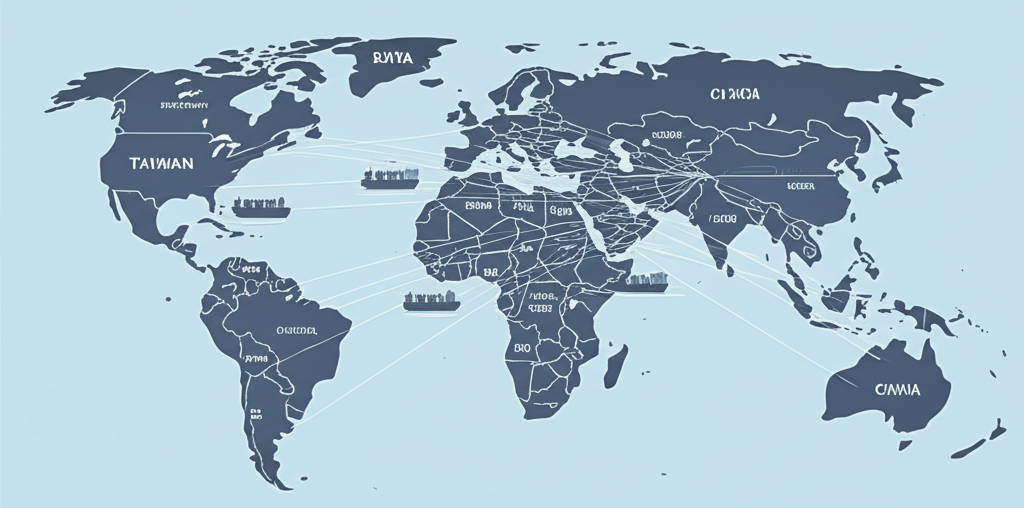
The logistics of this arrangement introduce a new layer of scrutiny to the global supply chain. As reported by Tom's Hardware, chips manufactured by TSMC in Taiwan will likely be routed through the United States for security reviews before final export to China. This detour allows U.S. officials to verify the end-users and ensure the hardware is not diverted to unauthorized military entities.
"The United States will allow Nvidia's H200 processors... to be exported to China and collect a 25% fee on such sales," stated Reuters, highlighting the administration's focus on revenue generation.
Beijing's Dilemma: Access vs. Autonomy
While the U.S. green light offers a reprieve for Nvidia's revenue streams, the reception in China has been mixed. Following the announcement, reports from the Financial Times and Tom's Hardware revealed that Beijing convened "emergency meetings" with major technology firms, including Alibaba, Tencent, and ByteDance.
The central tension for Chinese policymakers is clear: accepting the H200 chips accelerates the development of Chinese AI applications but potentially undermines the country's drive for semiconductor independence. By relying on U.S. imports-taxed at a premium-Chinese tech giants would continue to fund their primary geopolitical rival's ecosystem. Consequently, there are indications that Beijing may impose its own limits on these purchases to force companies toward domestic alternatives, despite the performance gap.
Market Impact and Supply Chain Strain
For Nvidia, this policy shift represents a massive commercial opportunity. The company stands to potentially regain billions in revenue lost due to previous export restrictions. However, the reintroduction of Chinese demand into an already constrained market could exacerbate global shortages. Network World notes that this policy shift could "redirect global demand toward one of the world's largest AI markets and intensify competition for already limited GPU inventories," potentially affecting enterprise customers in Europe and North America.
Analysis: The Geopolitics of Chip Diplomacy
This development signifies a nuanced evolution in U.S. trade policy. Rather than a total blockade, which risks incentivizing faster indigenous innovation in China, the U.S. is opting to extract value from its technological lead. The 25 percent fee acts as a sovereign rent on American innovation, effectively forcing Chinese companies to subsidize the U.S. treasury for the privilege of remaining competitive in AI.
Furthermore, the requirement for security reviews and "approved customers" retains the U.S. government's ability to act as a gatekeeper. Washington can turn the tap on or off based on broader geopolitical behavior, transforming chip exports into a flexible diplomatic lever rather than a static wall.
What Happens Next?
The immediate focus now shifts to the implementation of these licenses. Industry observers will be watching closely to see which Chinese entities receive approval and how swiftly the supply chain can adapt to the new routing requirements through the U.S.
Simultaneously, the reaction from Beijing remains the wildcard. If the Chinese government decides to block or strictly limit these imports, the U.S. policy may yield less revenue than anticipated, while accelerating the bifurcation of the global semiconductor market. As noted by Bloomberg and Financial Times, the strategic calculus for both nations has moved beyond simple economics into the realm of national security and long-term technological sovereignty.