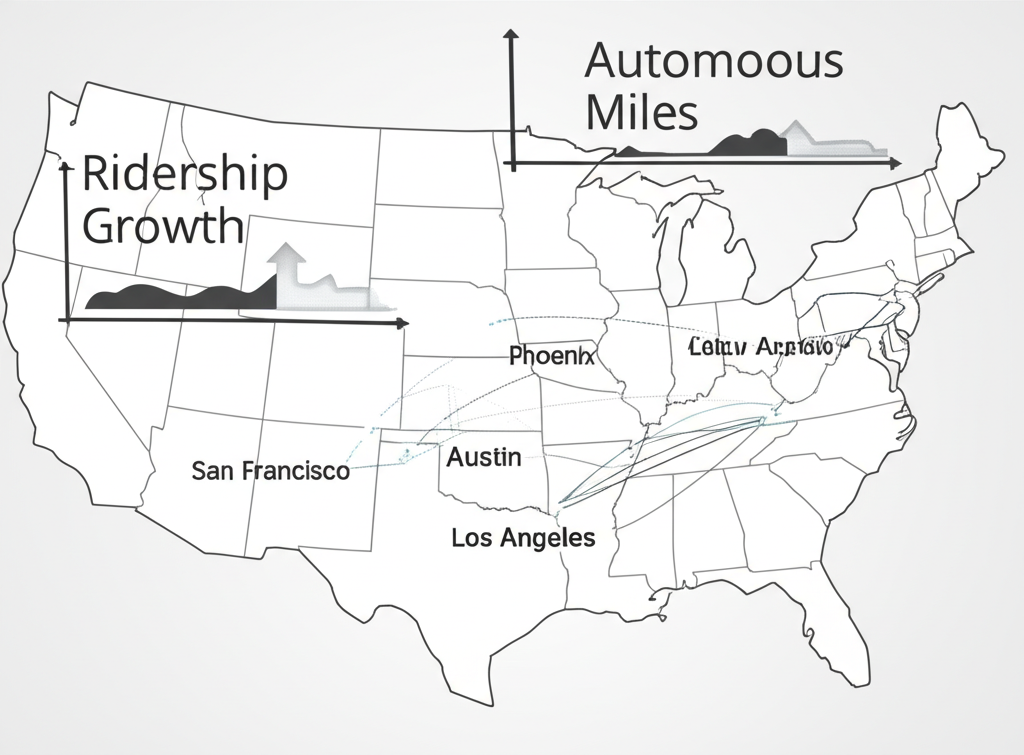
SAN FRANCISCO - The race for autonomous vehicle supremacy has a clear frontrunner. Waymo, the self-driving unit of Alphabet Inc., has officially crossed a historic threshold, logging 100 million driverless miles as of mid-2025. This milestone, reported by CBT News, represents a dramatic acceleration of the company's operations, with mileage doubling from 50 million at the end of 2024 to 100 million in just six months. As competitors like Tesla struggle to move beyond regulatory and technical hurdles, Waymo is rapidly converting the promise of driverless transport into a commercial routine across major American cities.
The surge in mileage is underpinned by explosive user adoption. According to data from Ramp, Waymo ride transactions increased by nearly 11,000% from May 2023 to April 2025. This exponential growth signals a pivotal shift in consumer confidence, moving robotaxis from a technological curiosity to a viable daily transit option for hundreds of thousands of riders.
Scaling the Fleet: From Niche to Nationwide
Waymo's strategy has shifted from cautious testing to aggressive territory expansion. Reuters reports that the company has now opened its autonomous ride-hailing service to the general public in Los Angeles, following a successful full-scale launch in San Francisco in June 2024. The waiting lists have been scrapped, allowing anyone with the app to hail a ride.
Crucially, the service is no longer confined to surface streets. Projectreylo notes that Waymo has commenced freeway operations in San Francisco and Phoenix, a technical leap that reduces ride times by up to 50% on certain routes. This development directly addresses one of the primary criticisms of early robotaxi services-efficiency.
"In 2024 alone, its ride-hailing service, branded as Waymo One, completed more than 4 million more [rides]. With 700-plus cars on the road, it's currently surpassing 200,000 rides a week." - Fast Company
Strategic Alliances and Financial War Chest
To fuel this capital-intensive expansion, Waymo secured a massive $5.6 billion funding round in late 2024, led by Alphabet. According to Reuters, this brings the total capital raised between 2020 and 2024 to over $11 billion. This financial runway is critical as the company eyes profitability.
In a move that surprised some industry analysts, Waymo has chosen collaboration over isolation. A key partnership with Uber, announced to begin in early 2025, will bring autonomous ride-hailing to Austin and Atlanta. As detailed in Uber's press release, the rideshare giant will manage and dispatch a fleet of Waymo's all-electric Jaguar I-PACE vehicles exclusively through the Uber app in these new markets. This hybrid model allows Waymo to leverage Uber's demand network while focusing on its core competency: the "Driver" technology.
The Competitive Gap: Waymo vs. Tesla
The widening gap between Waymo and its closest theoretical competitor, Tesla, highlights the difference between operational reality and aspirational marketing. While Tesla CEO Elon Musk has indicated plans to roll out driverless ride-hailing in California and Texas, Reuters notes that Waymo is already firmly established in these territories with a proven safety record and paid service model.
Industry observers point out that Waymo's methodical approach-mastering specific geofenced areas before expanding-has paid off. By late 2025, Waymo's service area covered nearly 500 square miles across four major metropolitan areas. In contrast, competitors are still grappling with the initial stages of regulatory approval for driverless commercial operations.
Financial Implications and Future Outlook
The economics of robotaxis are beginning to come into focus. Ainvest projects that Waymo's revenue will jump from approximately $125 million in 2024 to $1.3 billion by 2027. This tenfold increase is predicated on expanding the fleet to 3,500 vehicles and entering new markets like Dallas.
However, challenges remain. Reports indicate that rides are currently 30-40% more expensive than standard Uber or Lyft trips, raising questions about long-term mass adoption elasticity. Yet, with over 25 million electric miles driven in 2024 alone, the environmental and safety arguments-eliminating human error and tailpipe emissions-continue to provide strong political cover for further expansion.
As 2026 approaches, Waymo's transition from a moonshot project to a municipal utility seems all but assured. With deep pockets, a working product, and strategic partners, the company has effectively built a moat that rivals will find increasingly difficult to cross.